Feature
How Much Difference Do Lightweight Wheels Really Make?
A lighter wheel isn't just a lighter wheel. It is unsprung mass. It is rotating mass. But how much difference does that make?
October 10, 2026
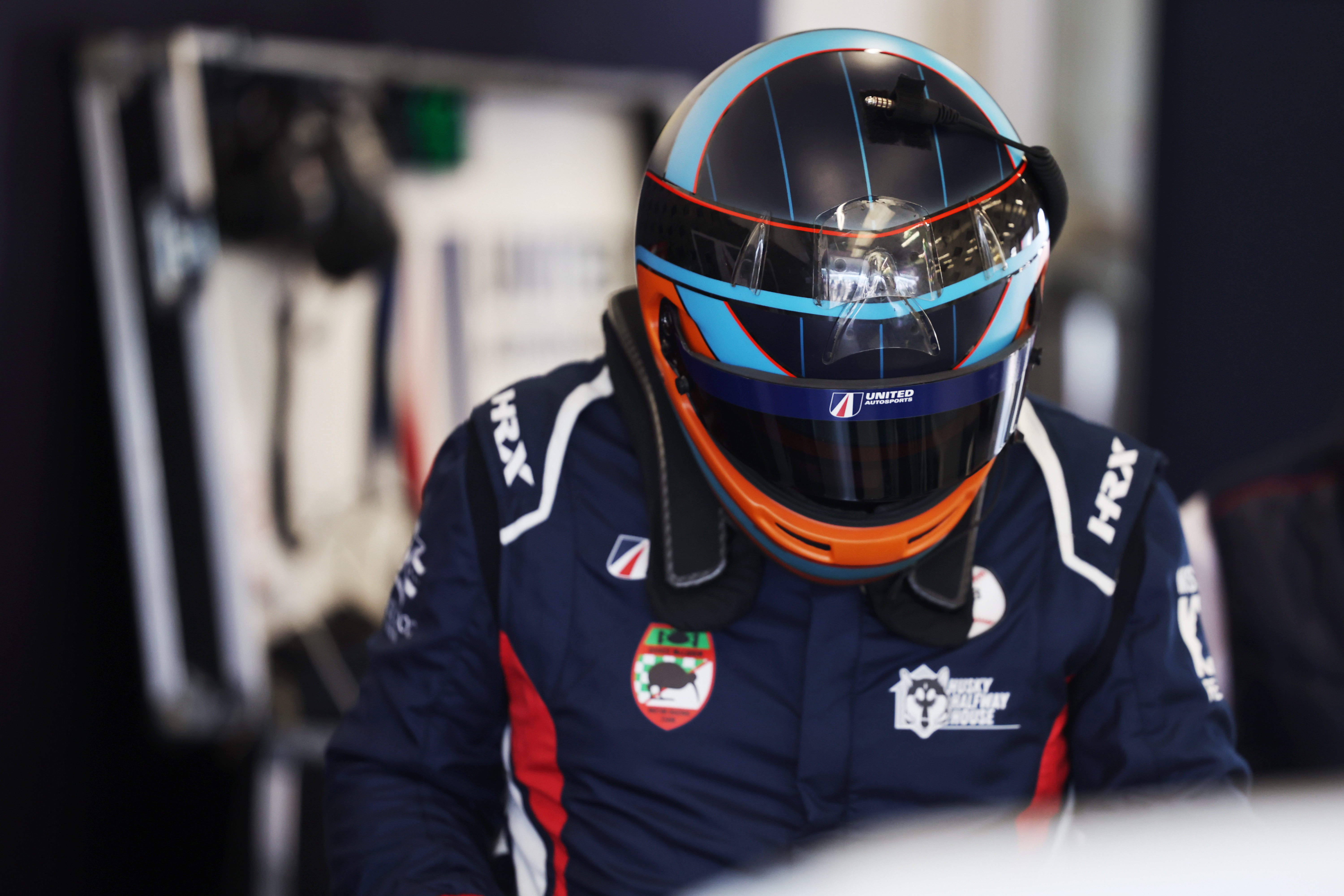
From hat to lifeline, the evolution of motorsport's greatest lifesaver.
There was a time, not all that long ago in the grand scheme of things, when a Formula One driver would climb into a car capable of rearranging his internal organs, glance briefly at a horizon filled with hedges, trees and poorly positioned spectators… and then pull on what can only be described as a decorative hat.
Not a helmet. A hat. A sort of leather pudding basin with the structural integrity of a croissant and about as much use in a high-speed accident as positive thinking.
This was the early 1950s, when Formula One began, and the prevailing attitude towards safety was wonderfully simple: try not to crash.
The problem, of course, was that crashing was rather inevitable. And so began one of the most fascinating evolutions in motorsport – not of engines, or aerodynamics, or tyres – but of the one thing that sits between a driver’s brain and a very bad day.
When Bravery Was the Safety System
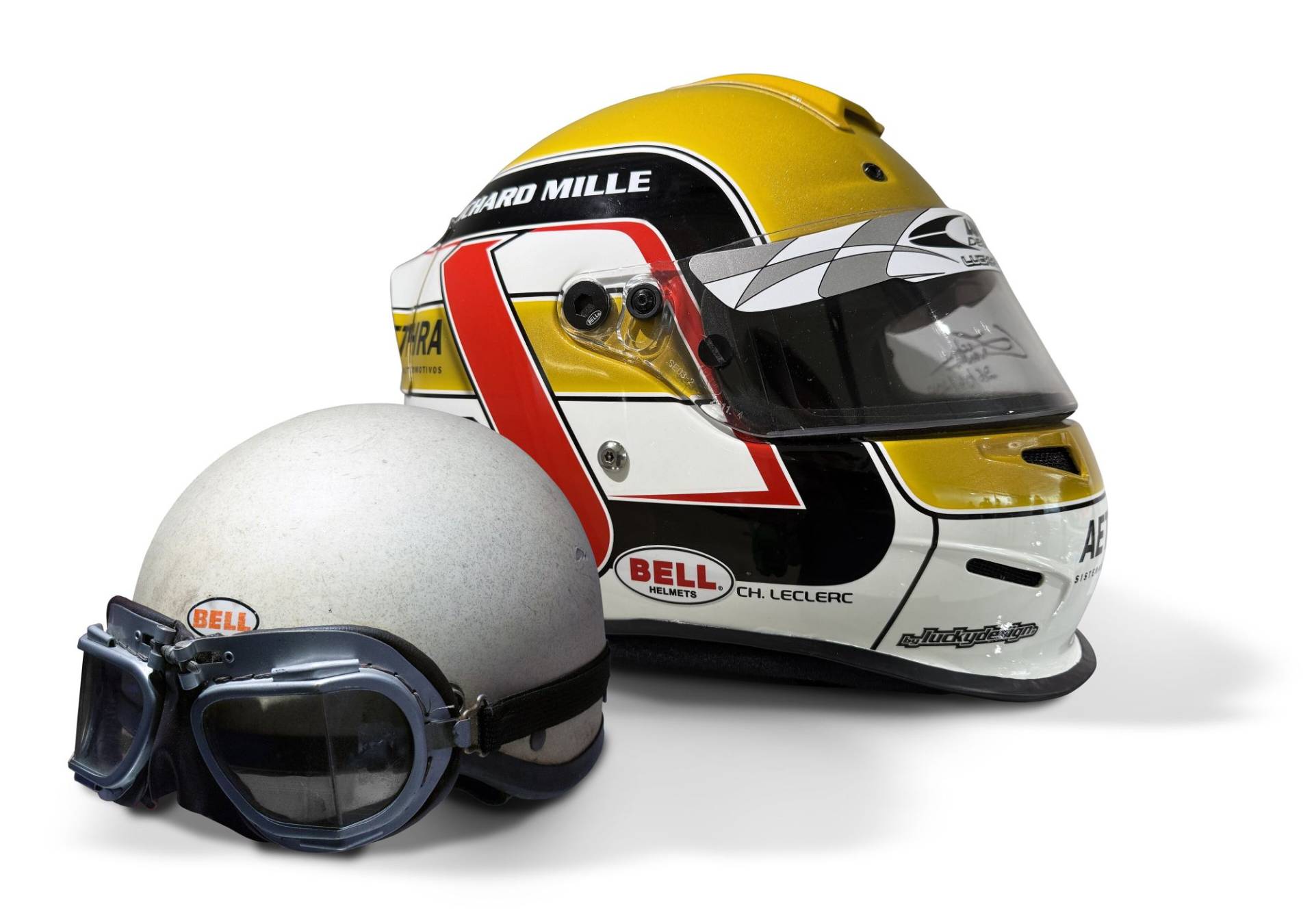
In the beginning, drivers wore open-face helmets made from leather or cork, paired with goggles that fogged up at precisely the moment you needed to see the braking point. These weren’t designed to protect so much as to make you look vaguely like you knew what you were doing.
If you hit something solid at 150mph, the helmet wasn’t going to save you. But at least your hair would remain neatly in place for the post-race photograph.
Drivers like Juan Manuel Fangio and Alberto Ascari raced in this era, where the car was dangerous, the track was dangerous, and the helmet was largely there for moral support.
It’s difficult to comprehend now, because modern Formula One is built on layers of protection, data, and engineering brilliance. Back then, it was built on courage, instinct… and a fairly casual relationship with mortality.
But change was coming. Not because the sport suddenly became cautious – Formula One has never been particularly fond of caution – but because the consequences of doing nothing were becoming impossible to ignore.
By the late 1950s and early 1960s, helmets began to resemble something closer to what we’d recognise today. Fibreglass shells replaced leather, offering actual protection rather than hopeful optimism.
Progress, you’d think. Drivers disagreed.
The new helmets were heavier, hotter, and significantly less comfortable. They restricted vision, trapped heat, and made drivers feel like they were racing inside a kettle. Many resisted them entirely, preferring the old open-face designs because at least you could breathe and see where you were going before the inevitable incident.
It’s a familiar pattern in motorsport. Every safety improvement is initially met with suspicion, then mild annoyance, and finally complete acceptance once everyone realises it works. Drivers like Jim Clark and Graham Hill straddled this transition, still wearing open-face helmets but with materials that at least gave them a fighting chance.
But the real revolution hadn’t happened yet. That came when someone decided that perhaps, just perhaps, leaving the entire front of your face exposed to debris, fire, and the occasional flying wheel wasn’t ideal.
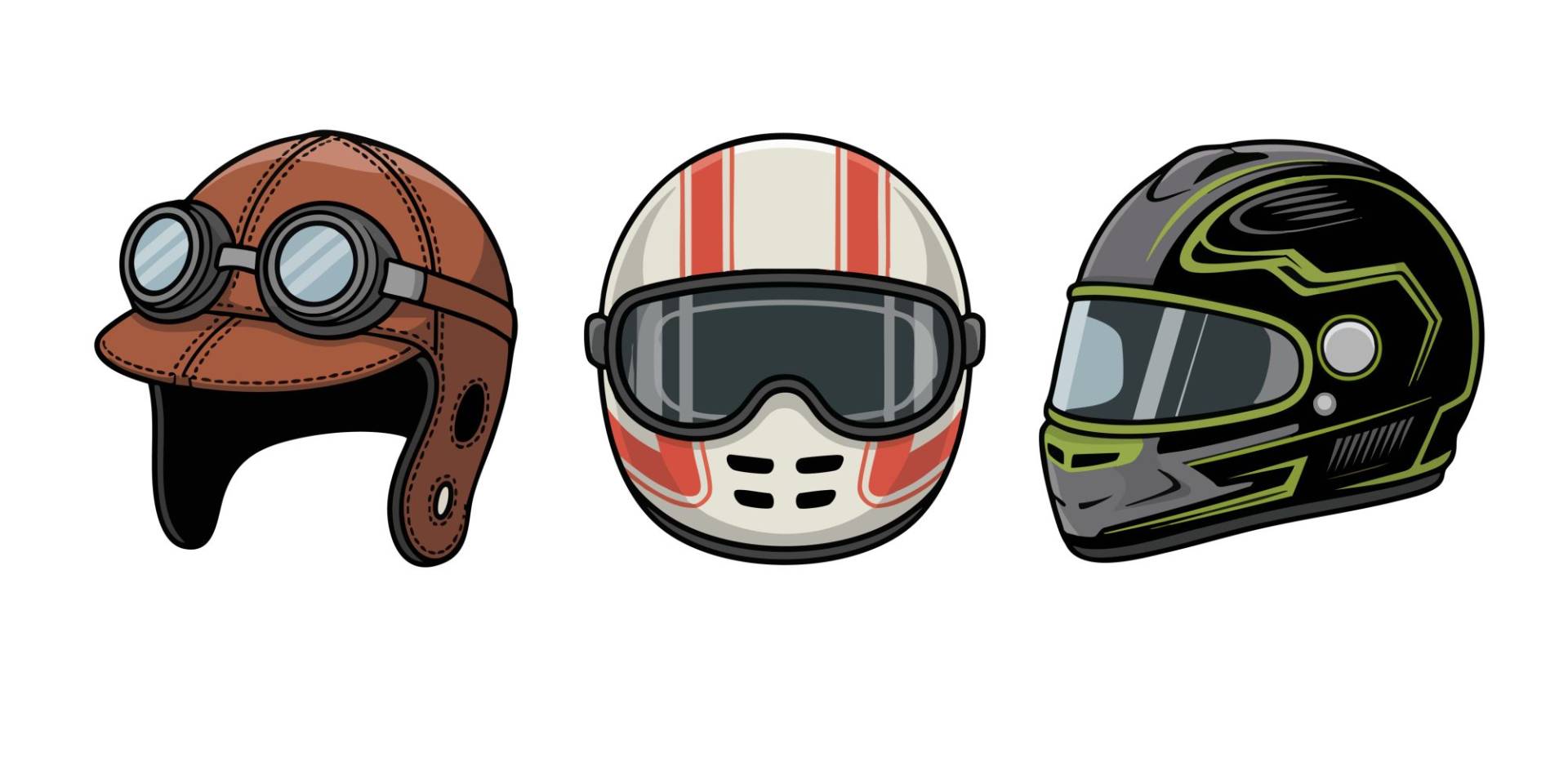
Enter the late 1960s, and the arrival of the full-face helmet. Initially developed for motorcycle racing, the design made its way into Formula One with all the subtlety of a sledgehammer. It covered the entire head, included a visor, and offered protection that finally matched the speed of the cars.
Drivers hated it. Again.
It was hot. It was claustrophobic. It made them feel like they were breathing through a letterbox. Vision was restricted, communication was harder, and it removed that last remaining sense of freedom drivers had grown used to.
But it worked. And once a few brave souls adopted it – and, crucially, survived incidents they might not otherwise have – the rest followed. By the early 1970s, the full-face helmet had become the standard, and suddenly the driver’s head was no longer the weakest link in the entire operation.
Manufacturers like Bell Helmets led the charge, producing designs that balanced protection with usability, and for the first time, the helmet became something more than just equipment. It became part of the identity.
Somewhere along the way, drivers realised that if they were going to wear these things for hours at a time, they might as well make them interesting. And so began the era of helmet design.
Simple colours at first, then patterns, then full-blown works of art. A driver’s helmet became their signature, their calling card, the one thing that remained constant even as cars, teams, and sponsors changed around them. Think of Ayrton Senna and his unmistakable yellow, green, and blue design. Or James Hunt with a helmet that looked exactly like the sort of thing a man like James Hunt should wear.
In a sport where everything moves at 200mph, the helmet became the easiest way to identify the human inside the machine. Which is important, because by this point, the machines were becoming increasingly terrifying.
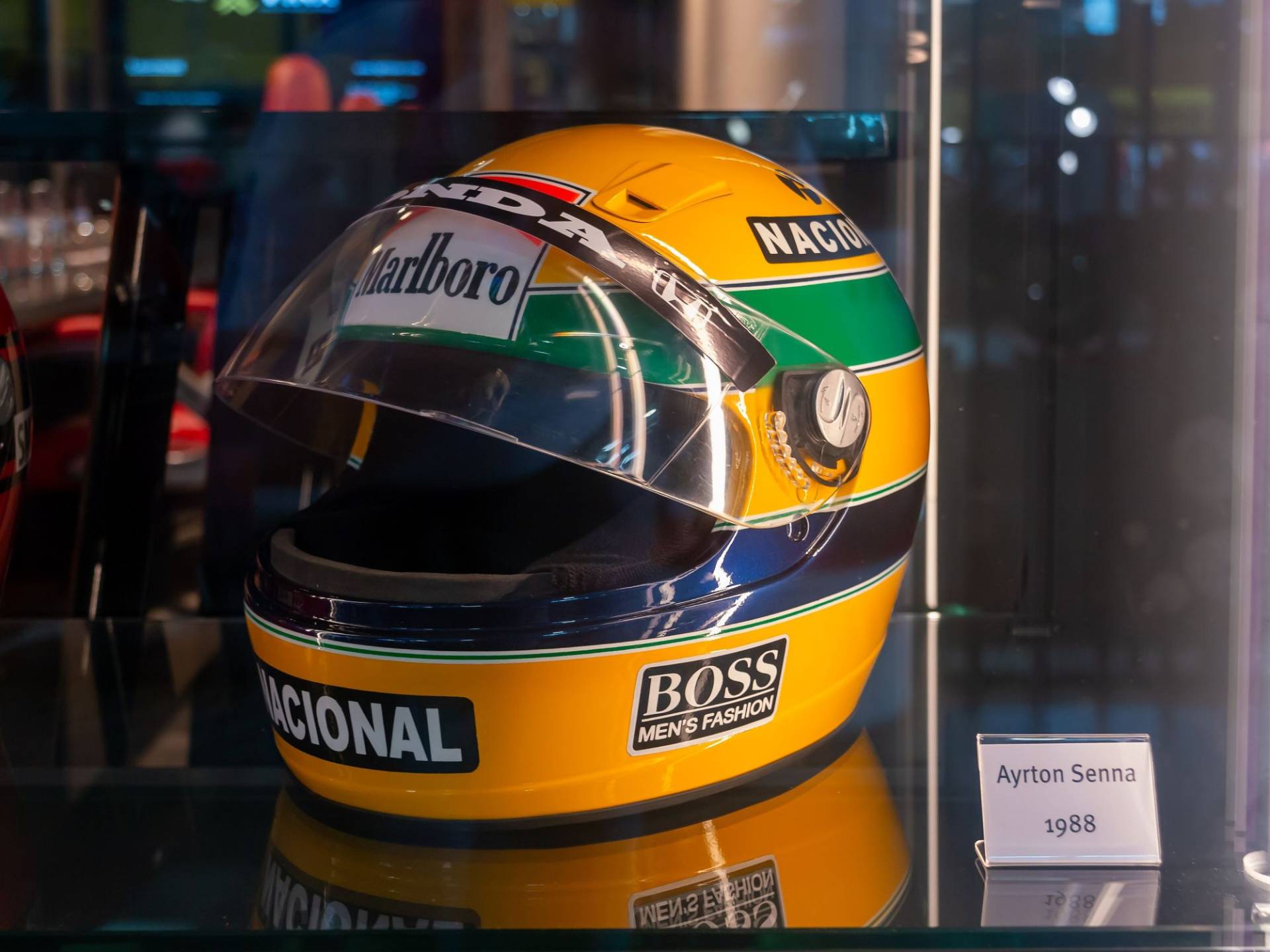
By the 1980s and 1990s, Formula One cars had entered a new phase of performance. Speeds increased, downforce grew, and accidents became more violent simply because everything was happening faster. The helmet had to keep up.
Materials evolved from fibreglass to advanced composites, including carbon fibre and Kevlar. These weren’t just stronger; they were lighter, which meant less strain on the driver’s neck during high-speed impacts.
Visors became more advanced too, designed to resist shattering, fogging, and the occasional high-speed encounter with debris that had no business being airborne.
This was also the era where safety stopped being reactive and started becoming proactive. Instead of waiting for accidents to reveal weaknesses, engineers began anticipating them.
And then, in 1994, everything changed.
The deaths of Ayrton Senna and Roland Ratzenberger at the 1994 San Marino Grand Prix forced Formula One into a period of intense reflection. Safety could no longer be an afterthought.
Helmets became a central focus, subjected to rigorous testing that bordered on the obsessive. Impact resistance, penetration resistance, fire resistance – everything was scrutinised, improved, and tested again.
The FIA introduced standards that ensured every helmet could withstand forces far beyond what had previously been considered survivable. From this point on, a Formula One helmet wasn’t just protective. It was extraordinary.
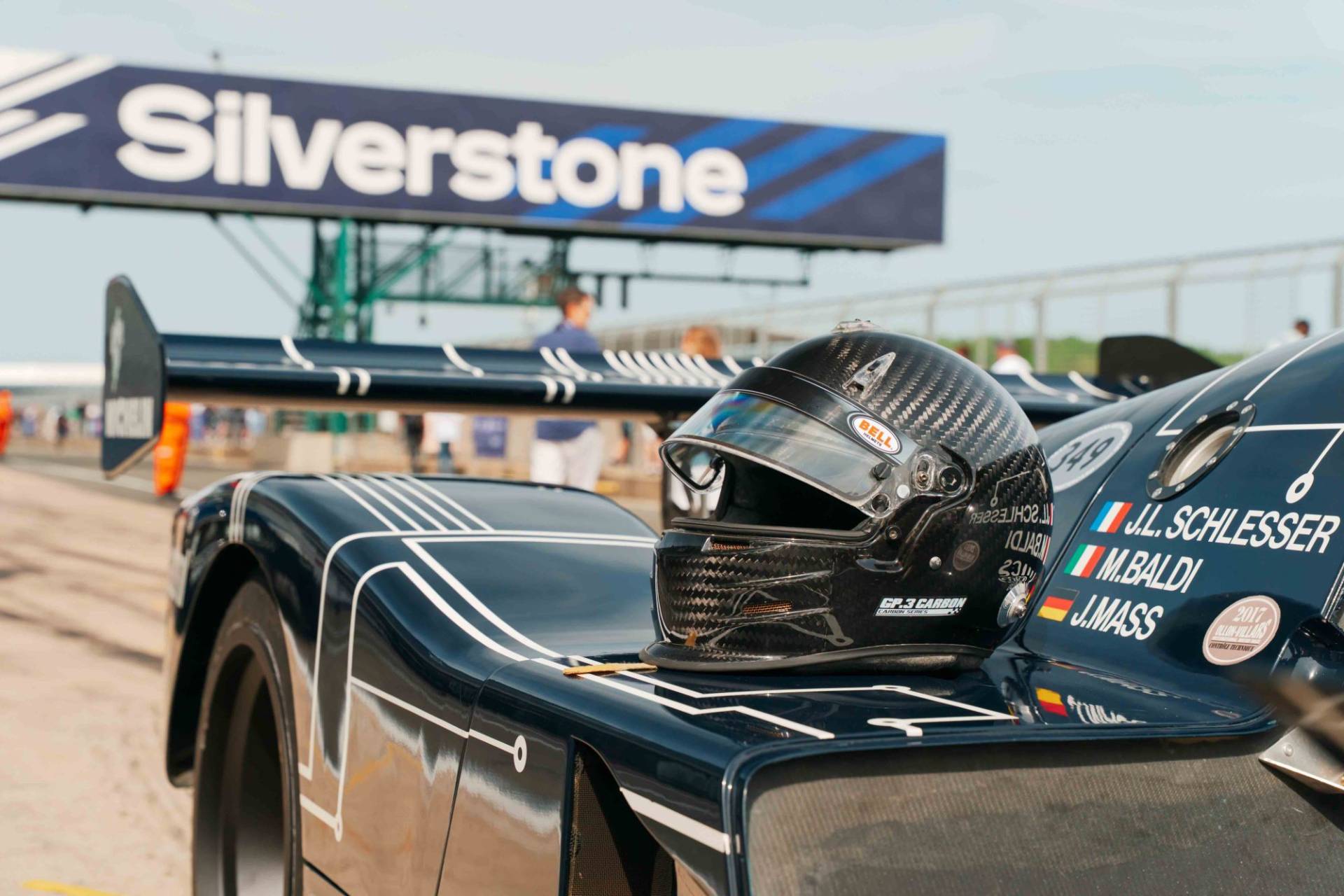
Today’s Formula One helmets are, quite frankly, ridiculous. In the best possible way.
They are built from layers of carbon fibre, Kevlar, and other materials that sound like they belong in a spacecraft rather than on someone’s head. They can withstand impacts at speeds that would have been unthinkable in the 1950s, resist flames for extended periods, and deflect debris travelling at terrifying velocities.
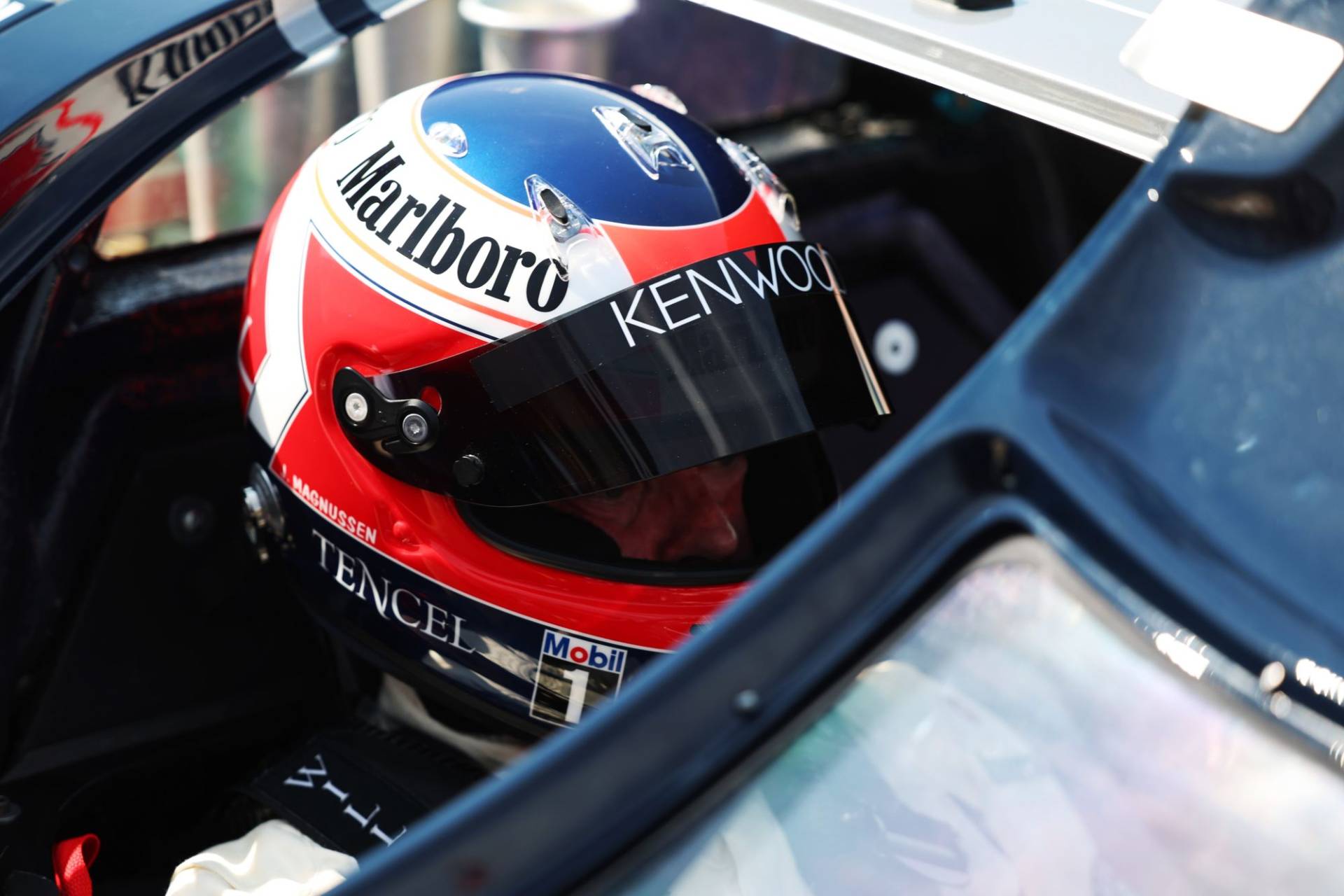
Inside, they are custom-moulded to each driver, fitted with radio systems, hydration tubes, and ventilation channels that somehow manage to keep a driver relatively comfortable while sitting in what is essentially a high-speed oven.
The visor alone is a piece of engineering brilliance, designed to handle impacts, resist scratches, and allow for tear-offs so drivers can maintain visibility in changing conditions.
And then there’s the halo. Introduced in 2018, the halo works in conjunction with the helmet to deflect large debris away from the driver’s head. It was controversial at first – as all safety improvements seem to be – but has since proven itself beyond any reasonable doubt.
Ask Lewis Hamilton or Max Verstappen, and they’ll tell you the same thing. The helmet is no longer the last line of defence. It’s part of an entire system designed to ensure the driver walks away.
And that’s the remarkable part.
In just over seventy years, the Formula One helmet has evolved from a leather cap that offered little more than psychological comfort into one of the most advanced pieces of safety equipment in the world.
It has gone from being an accessory to being essential. From something drivers tolerated to something they rely on completely. And yet, despite all this progress, one thing hasn’t changed. It still sits there, quietly, doing its job, while everything else around it screams for attention.
The engine. The aerodynamics. The speed. But the helmet? It just gets on with it. Which is probably exactly how it should be. Because in Formula One, the most important thing is not how fast you go. It’s whether you get to do it again next weekend.
Written by: Paul Pearce