Feature
The New Tesla Roadster — Genius or Insanity?
The Tesla Roadster: Or how Elon Musk spent nine years inventing a car that can do a backflip, drive on the ceiling and make absolutely no sense whatsoever.
October 19, 2026
A collection of obscure rarities, forgotten specials and ultra-exclusive models you probably never knew existed, all on the market right now.
With the Internet and social media, it isn’t often you come across something you’ve never heard of, but maybe, just maybe, there might be something in this list of rarities that enlightens you to something previously unknown.
We’ve been shopping at our dealer partners for cars you might not have heard of, whether it’s a limited edition not many people know about, a coachbuilt special by the likes of Zagato, or even an entire model you weren’t aware existed.
Without further ado, let’s get into it, and feel free to keep score of how many you knew/didn’t know!

2018 (18) | 13,510 Miles | £77,995
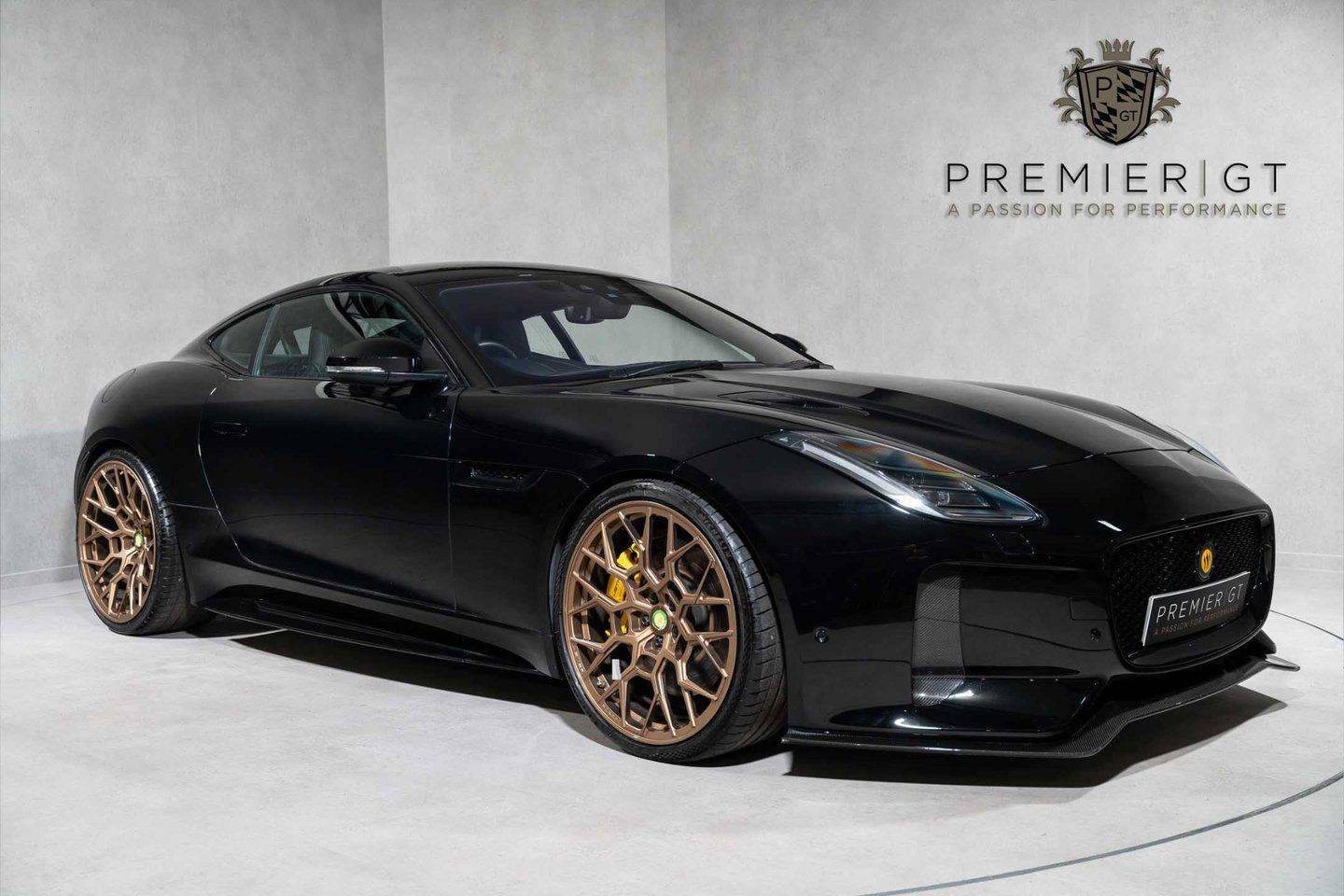
The Lister LFT-666 is essentially a brutally reworked version of the Jaguar F-Type R, reworked enough to give it a whole new name. Known more for historic racers like the Knobbly, Lister reinvented itself as a low-volume tuning and coachbuilding company, aiming for more power, more drama, and more exclusivity, and this is one of their creations, turning up the insanity of an already pretty unhinged car.
The 666 in the name is very deliberate, with power from the 5.0-litre supercharged V8 upped to a devlish 666hp, making it a seriously muscular bit of kit capable of reaching 208mph, and Lister’s most powerful production car ever. There are also extensive carbon fibre aerodynamic modifications and a redesigned front bumper and grille. It’s subtle, but it’s aggressive and looks much more polished than if you bought an F-Type and drilled an aftermarket splitter on.
Just 99 examples were ever produced, so it’s unlikely you’ll ever see another. To some, it will be a modified F-Type, to others, especially those who appreciate British motorsport pedigree, it will be something very special.
1969 | 1,272 Miles (since restoration) | £129,995

Ok, you’ve heard of a Porsche 911, but what on earth of Sportomatic? If you’re thinking it’s a play on automatic, you’d be on the right tracks, but not quite. Sportomatic is a conventional four-speed synchromesh gearbox in series with a torque converter and normal clutch operated by a vacuum-controlled lever, essentially making this is a manual without a clutch, with the smooth shifts you’d associate with an automatic — something of an anomaly right through automotive history, and totally unheard of in today’s market.
Records suggest just 192 were imported into the UK between 1968 and 1972, with this being one of just five registered in 1969. Apparently, many were converted to regular manuals, making the numbers even more scarce.
The car has been through a bare-metal restoration and an in depth mechanical overhaul including the gearbox, having covered just 1,272 miles since, so it’s either ready to be enjoyed, or looking perfect for preserving. If you want the ultimate driver’s classic 911, obviously you want a manual, but if you can’t drive a manual, or you want something much rarer, the 911 no one has heard of is worth a look.
2013 | 14,060 Km | POA

Yep, an electric version of a car known for its unapologetically giant V8. Those who watched Top Gear will likely have heard of this car when it featured in a track battle against the petrol-powered SLS AMG Black Series, but it was just a concept, right?
Well, it turns out, fewer than 10 SLS E-Drive models ended up in private hands, and you can buy one too! It is one of the rarest AMG models ever built, and despite electric power seemingly going against everything AMG stands for, it’s one of the most powerful too, with 751hp — nearly 200 more than the standard SLS.
Despite being such a collector’s item, this car has actually been driven, showing 14,000 km on the clock. This is another car some will get and some won’t. Is an SLS pointless without the V8, or is this an early excibition of what could be achieved with electric performance cars? Either way, it’s incredibly rare, and something not many will be aware you can actually buy.
2017 | 3,649 Miles | £699,999

You all know what a McLaren 675LT is. It’s one of the greatest driver’s supercars ever made, if you ask me. But did you know MSO did a special run of 25 cars with exposed carbon fibre bodies? Aptly named Carbon Series and inspired by the visual carbon fibre P1 revealed at the 2016 Geneva Motor Show, this is one of the most striking McLarens ever produced, and certainly one of the most exclusive.
This wasn’t just a case of leaving out the paint layer and lacquering the carbon bodywork. The carbon fibre weave pattern had to be obsessively aligned to ensure a perfect look including a herringbone pattern running down the centre of the car. The process is massively labour intensive because any tiny imperfection will be visible.
The rarity is showing in used values when they very occasionally pop up for sale. New, they were around £400,000. Now, we’re not far off double that, but that’s no surprise when it’s exactly as rare as the McLaren Solus GT track-only hypercar.
2010 | 18,342 Miles | £64,950

If there’s a car that springs to mind when you’re thinking of buying a racing car for track days, it’s probably not a Maserati GranTurismo. The MC Trofeo is rare, with just 42 built, and it’s extreme, with total focus on track performance. It’s powered by a 506 version of Maserati’s gloriously sonorous 4.7-litre V8 with a straight-through exhaust system, and was originally campaigned in the Maserati MC Trofeo one-make series.
I didn’t know this car existed, and now the want for a go around Silverstone is very real. What makes it even cooler? After I’d finished on track, I could drive it home, because after this car was retired from racing, it was adapted and registered for UK road use, making it the only road-registered example in the world!
2004 | 939 Miles | £179,950

If I said Aston Martin DB AR1 to you, you might think I was talking about some 1950s racing car, but actually, this is the super-rare Volante version of the DB7 Zagato even some Aston Martin fans might not have heard of. AR1 stands for “American Roadster 1”, because this was a model designed specifically for the US market, aimed at states where crash regulations prevented Aston from selling the standard DB7 Zagato. It’s one of those cars where half the appeal is explaining to people what it actually is.
Just 99 examples were built, all left-hand drive, and unlike the fixed-roof coupe Zagato, the AR1 ditched the roof entirely — no folding jobbie or even a Spyder RS puzzle of a roof, just a rain cover to protect the leather while parked. The gaping front grille, double-bubble rear deck and chopped-down windscreen give it a much more eye-catching look than a standard DB7, and that rear end might be Marmite, but it’s Zagato through and through.
This particular car has covered fewer than 1,000 miles from new — maybe previous owners lived in a rainy climate? Either way, the almost unicorn rarity and super low mileage mean this is a guaranteed collector’s item, and all things considered, I’d expect it to cost a lot more than £180k.
1972 | 47,025 Miles | £129,995

The De Tomaso Pantera is what happens when Italian styling and American muscle collide, accidentally creating one of the coolest cars of the 1970s. Founded by Alejandro De Tomaso, the company specialised in blending exotic Italian design with big, simple Ford V8 power, and the Pantera became its most famous creation.
Unlike a Ferrari or Lamborghini of the era, the Pantera used Ford’s 5.8-litre Cleveland V8, meaning you got proper supercar looks with mechanicals that were far less terrifying to maintain, and a character just as heavy metal as the band that shared the car’s name. It was sold through Lincoln-Mercury dealers in the US too, which feels completely bizarre now. Imagine walking into a Ford dealership and leaving with a mid-engined Italian exotic.
Styled by Tom Tjaarda at Ghia, the Pantera has all the wedge-shaped drama you’d want from the era, and today it sits in that sweet spot between classic muscle car and vintage supercar. Values have climbed massively in recent years as people have realised just how cool and usable they actually are, but the Pantera remains relatively attainable compared to its contemporary Italian rivals.
1978 | 31,000 Miles | £149,950

No, I haven’t posted the Pantera again, but it takes a squint to tell them apart at first glance! Everyone knows the Countach, but have you ever heard anyone talk about the poster they had of a Lamborghini Silhouette? That’s probably because just 54 examples were ever built, making it one of the rarest production Lamborghinis of all time, but instead of that rarity making it a legend, most have forgotten, or never even knew it exists.
Based on the Urraco, the Silhouette was Lamborghini’s first production road car with a removable targa roof, and visually it feels like a mini Countach in places, especially with the dramatic wheel arches and wide stance. Power came from a 3.0-litre V8 producing around 260hp, which doesn’t sound huge now, but in a compact 1970s Lamborghini with no driver aids whatsoever, it would still have been plenty lively enough.
The Silhouette was never a big commercial success, partly because Lamborghini was having a fairly chaotic time financially in the late 70s. It’s one of those cars many people will mistake for some obscure kit car, right until they realise it’s actually an ultra-rare Lamborghini. It might not have the allure of a Countach, and it’s a fraction of the price, but when it’s 40 times rarer, will that always be the case?
2010 | 15,600 Miles | £899,990
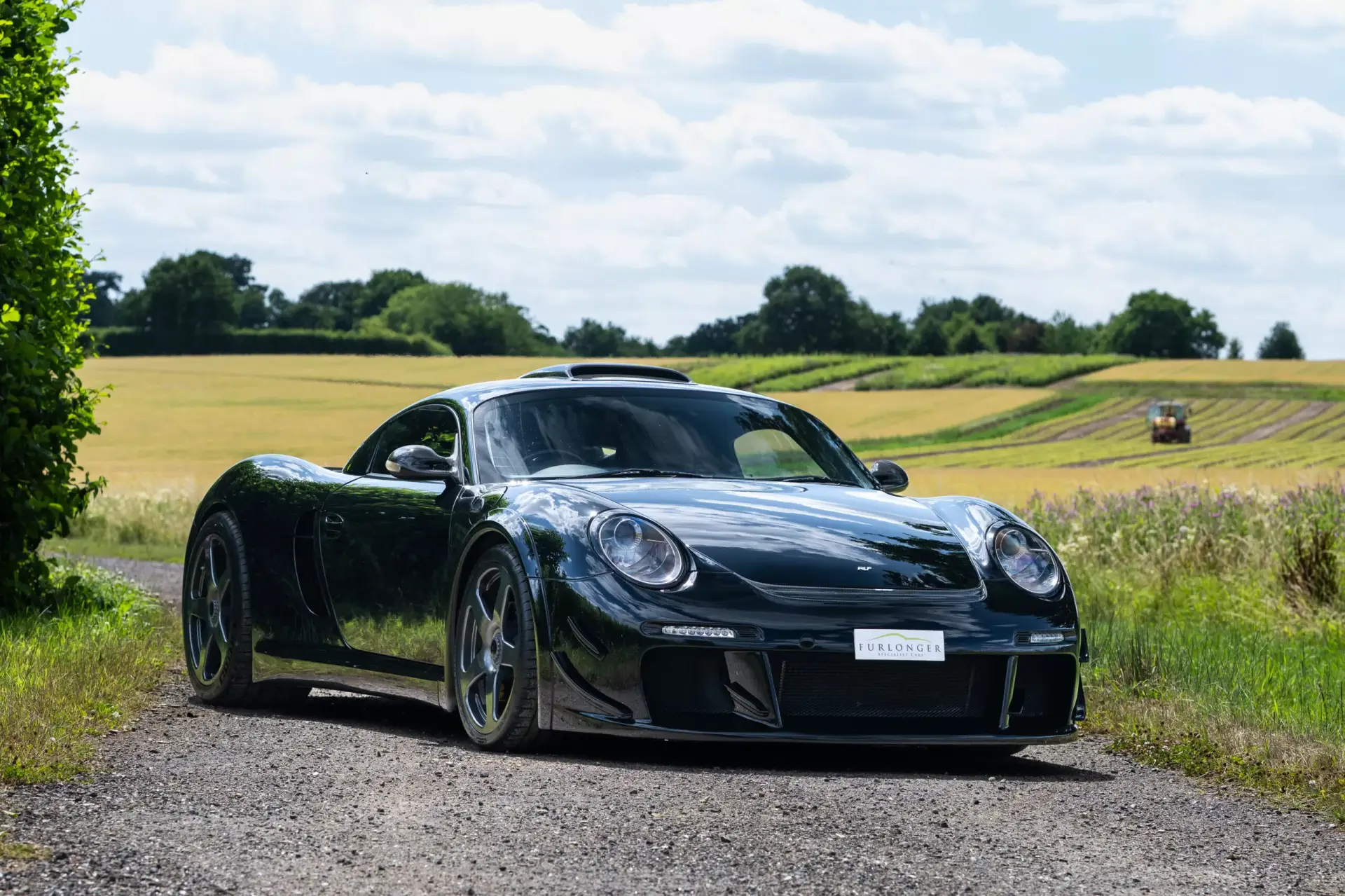
Most people know RUF for modified 911s like the iconic Yellowbird, but the CTR3 is something entirely different. Yes, it has Cayman-like proportions and Porsche DNA underneath, but this was effectively RUF building its own supercar from the ground up, and they built just 29 of them.
Developed with a bespoke chassis and a mid-engined layout, the CTR3 moved away from the traditional rear-engined 911 formula. Power goes to the rear wheels from a twin-turbocharged 3.8-litre flat-six producing 766hp in Clubsport specification, which is enough to make this thing properly savage even by modern standards.
Visually, it looks like somebody crossbred a Cayman, Carrera GT and Le Mans race car after several espressos. It’s dramatic, weird and extremely cool. Only a tiny number were built, and because RUF is recognised as a manufacturer in its own right rather than just a tuner, this isn’t technically a modified Porsche at all. It’s its own thing entirely, and the odds of seeing another are slim to none.
1958 | 67,926 Miles | £595,000

The Ferrari 250 lineage is packed with some of the most valuable and celebrated cars in history, but the 250 GT Ellena is one that you might not have heard of. Named after coachbuilder Carrozzeria Ellena, who took over production from Carrozzeria Boano during the model’s run, it represents one of Ferrari’s earliest truly usable grand tourers.
Under the bonnet sits the legendary Colombo 3.0-litre V12, an engine that helped define Ferrari through the 1950s and 60s. With elegant proportions and understated styling compared to later, more aggressive Ferraris, the Ellena feels more sophisticated GT car than outright sports car, but that’s exactly its charm.
Only around 50 Ellena examples were produced, making it exceptionally rare even within the already exclusive world of classic Ferraris. While the headline-grabbing competition Ferraris tend to dominate attention, cars like this perfectly capture the essence of early Ferrari road cars, and for a fraction of the price.
2002 | 10,300 Miles | £249,990
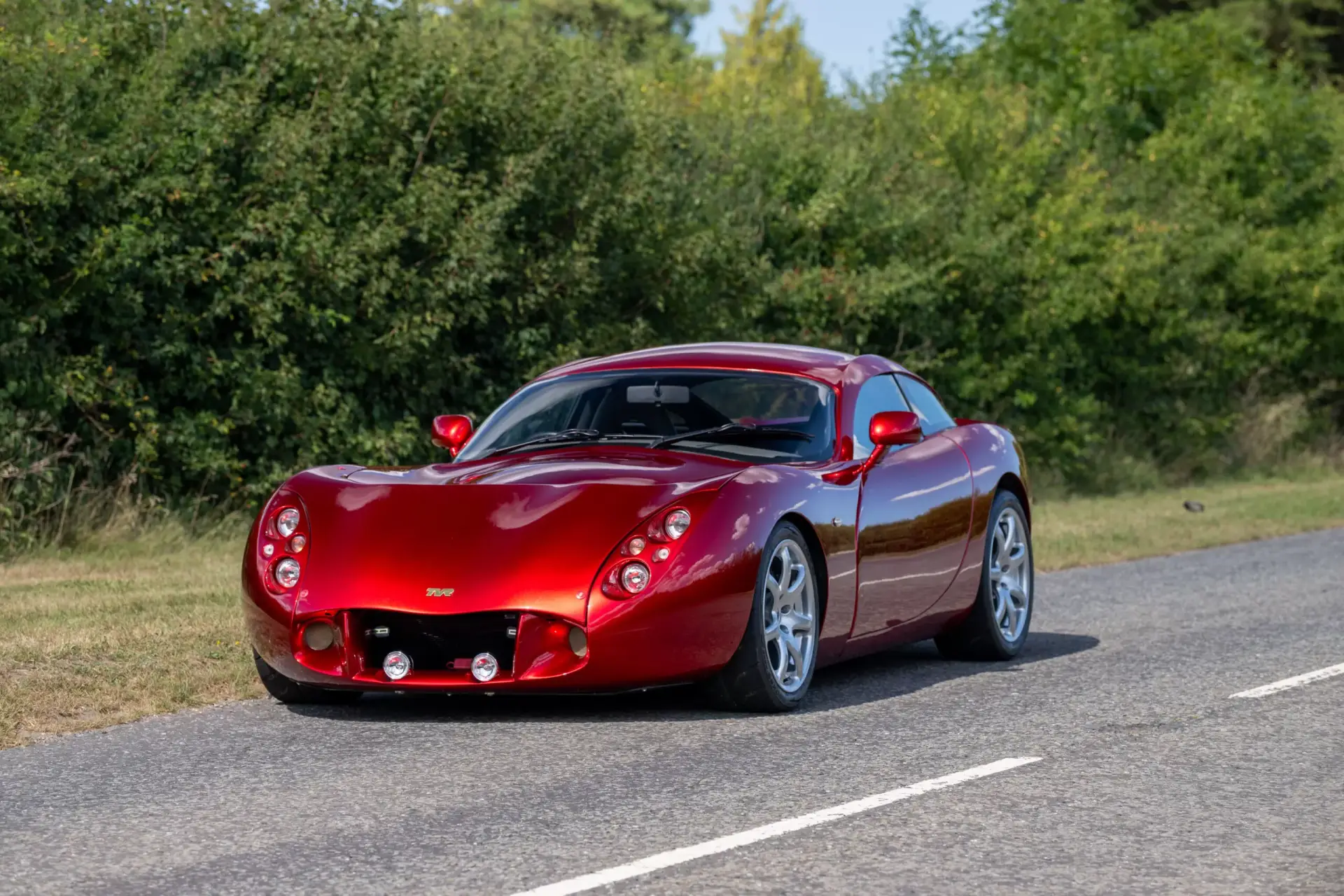
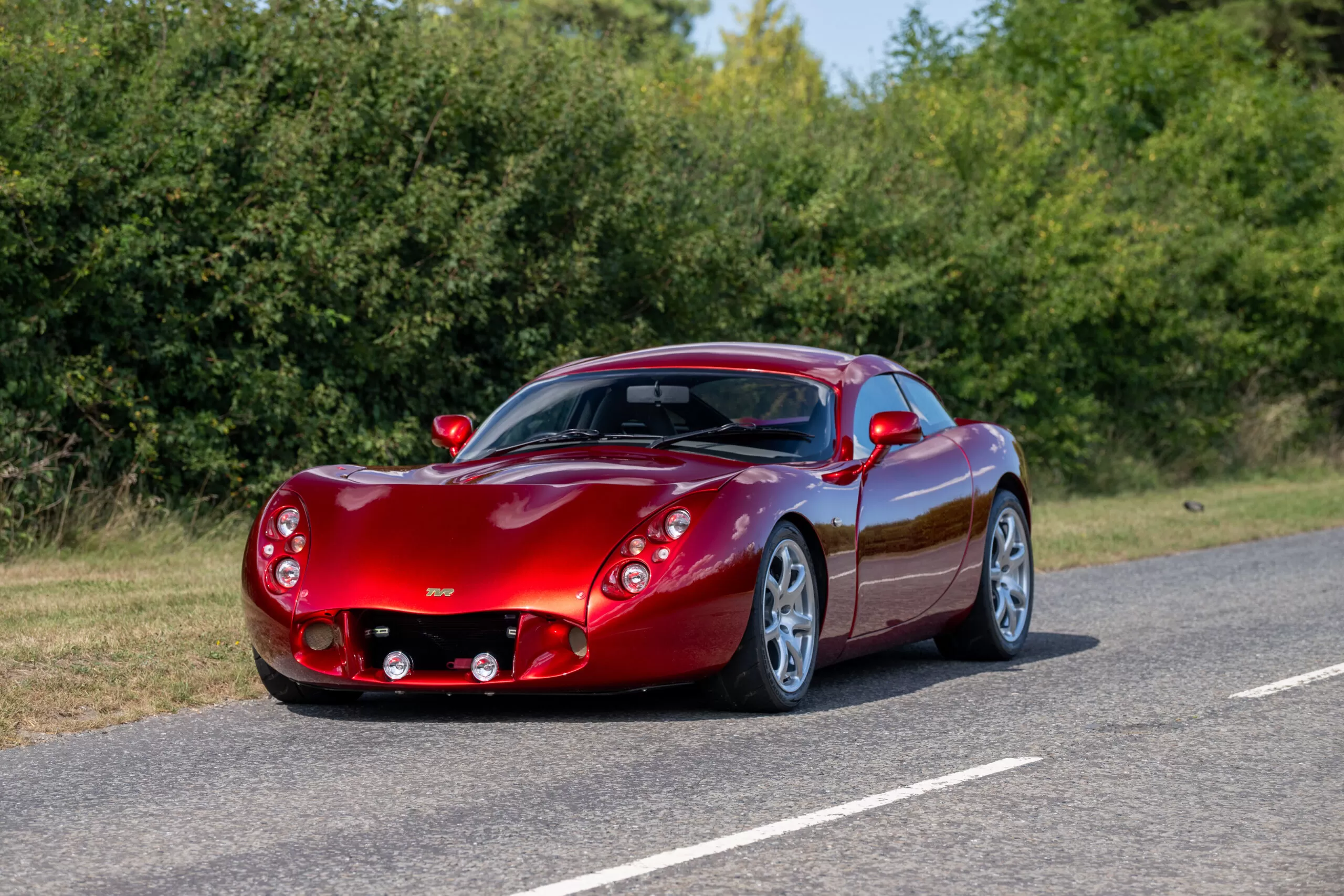
If you thought normal TVRs were wild, the T440R was TVR operating with absolutely no adult supervision whatsoever. Originally revealed as a concept before evolving into an ultra-low-volume production car, the 440R was effectively TVR’s vision of a hardcore British supercar, and this very car was presented to the FIA and homologated as the road-going example of what would be entered into GT1 and Le Mans.
Essentially a race car for the road, the T440R is powered by a 4.4-litre version of TVR’s infamous Speed Six engine producing around 440hp, the performance figures were properly serious for the early 2000s, especially in something weighing little more than the packet of Hobnobs the engineers in Blackpool munched on in their tea break. The styling looked completely bonkers too, with dramatic vents, curves and proportions that made even a Tuscan look fairly restrained.
Only three are believed to have been produced, of which this is the only road-registered example, putting it up there with the rarest TVRs ever built. Like many TVRs of the era, it came from a company seemingly fuelled by equal parts genius and chaos, which somehow only makes cars like this more appealing today.