Feature
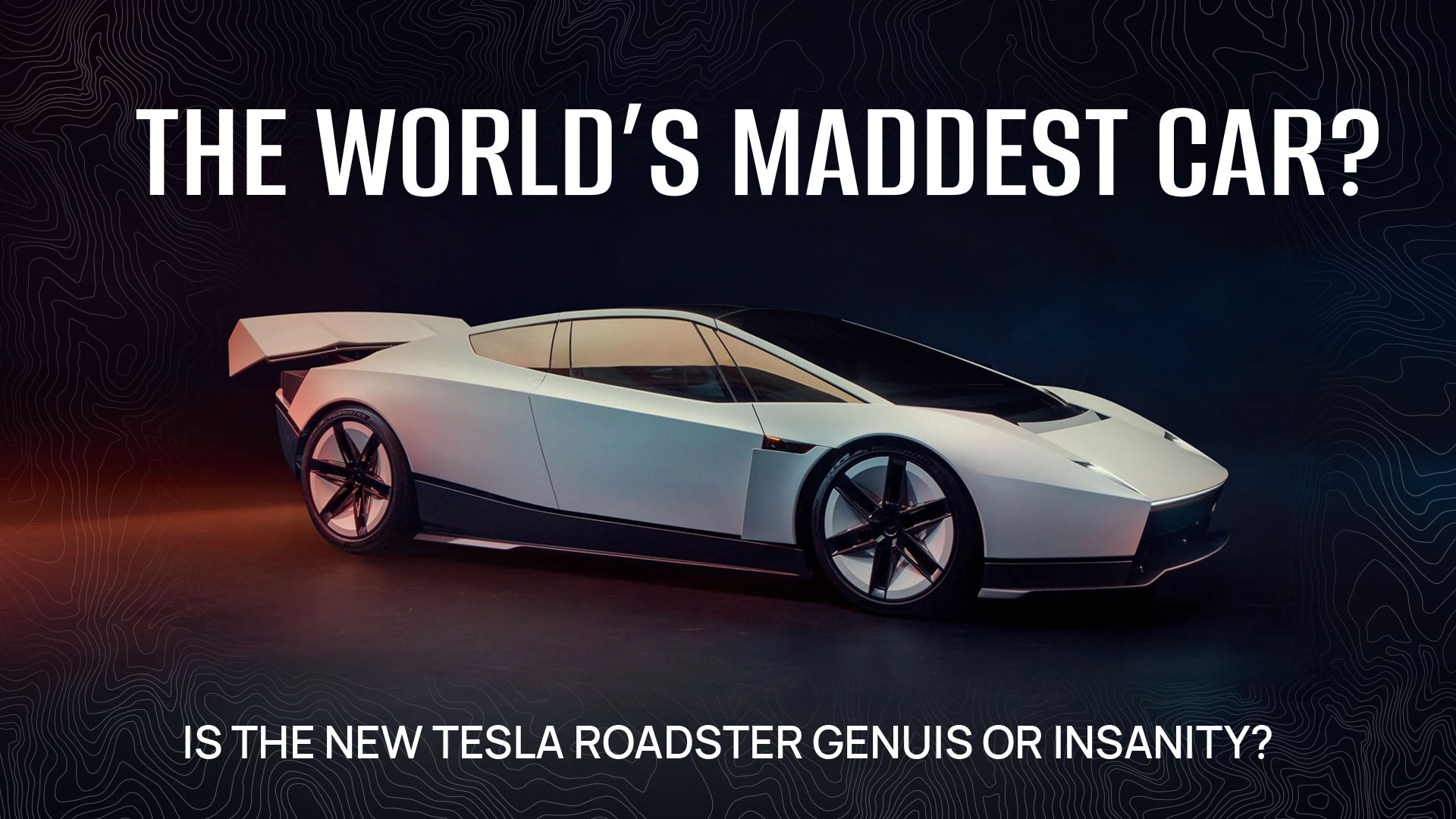
The New Tesla Roadster — Genuis or Insanity?
The Tesla Roadster: Or how Elon Musk spent nine years inventing a car that can do a backflip, drive on the ceiling and make absolutely no sense whatsoever.
October 19, 2026
More power, more tech, more performance. So why do yesterday’s supercars increasingly feel like the ones we really want?
There comes a point in every man’s life when he has to confront a truly horrifying possibility: your dad might have been right. Not about everything, obviously. He still thought the internet was a fad, insisted on printing directions from the AA Route Planner and could somehow spend an entire Sunday afternoon washing a Vauxhall Cavalier while simultaneously claiming he “didn’t have time” to do absolutely anything your mum had asked him to do. But there was one sentence dads of a certain generation absolutely loved.
"They don’t make them like they used to."
As children, we would hear this and immediately dismiss it as the ramblings of an elderly man who had simply failed to keep up with progress. Of course they don’t make them like they used to, Dad. They make them better now. Your Ford Cortina had 84 horsepower, drum brakes and a dashboard seemingly constructed from the same material as a Tupperware lunchbox. It required choke to start, WD-40 to continue running and an intimate relationship with the local AA patrolman to complete a journey of more than 60 miles.
New cars were obviously better. Every new generation was faster than the last, usually better looking, more powerful and more technologically advanced. If Ferrari replaced something, you wanted the replacement. If Lamborghini unveiled a new V12 flagship, the poster on your bedroom wall was immediately due an upgrade. Progress was progress, and nobody really questioned it.
Then something happened. I don’t know exactly when, but I reckon we can narrow the crime scene down to somewhere around 2016, because this is painful to admit: they really don’t make them like they used to. Oh God. Dad was right.

On paper, modern supercars are absolutely ridiculous. We now live in a world where a Ferrari can have nearly 1,000 horsepower, four-wheel drive, multiple electric motors, torque vectoring, active aerodynamics, traction control sophisticated enough to negotiate a peace treaty and enough computing power to operate Belgium. You can accelerate from rest to 62mph in comfortably under three seconds while enjoying Apple CarPlay, listening to a podcast and allowing the car to quietly work out which individual wheel requires another 17lb ft of torque.
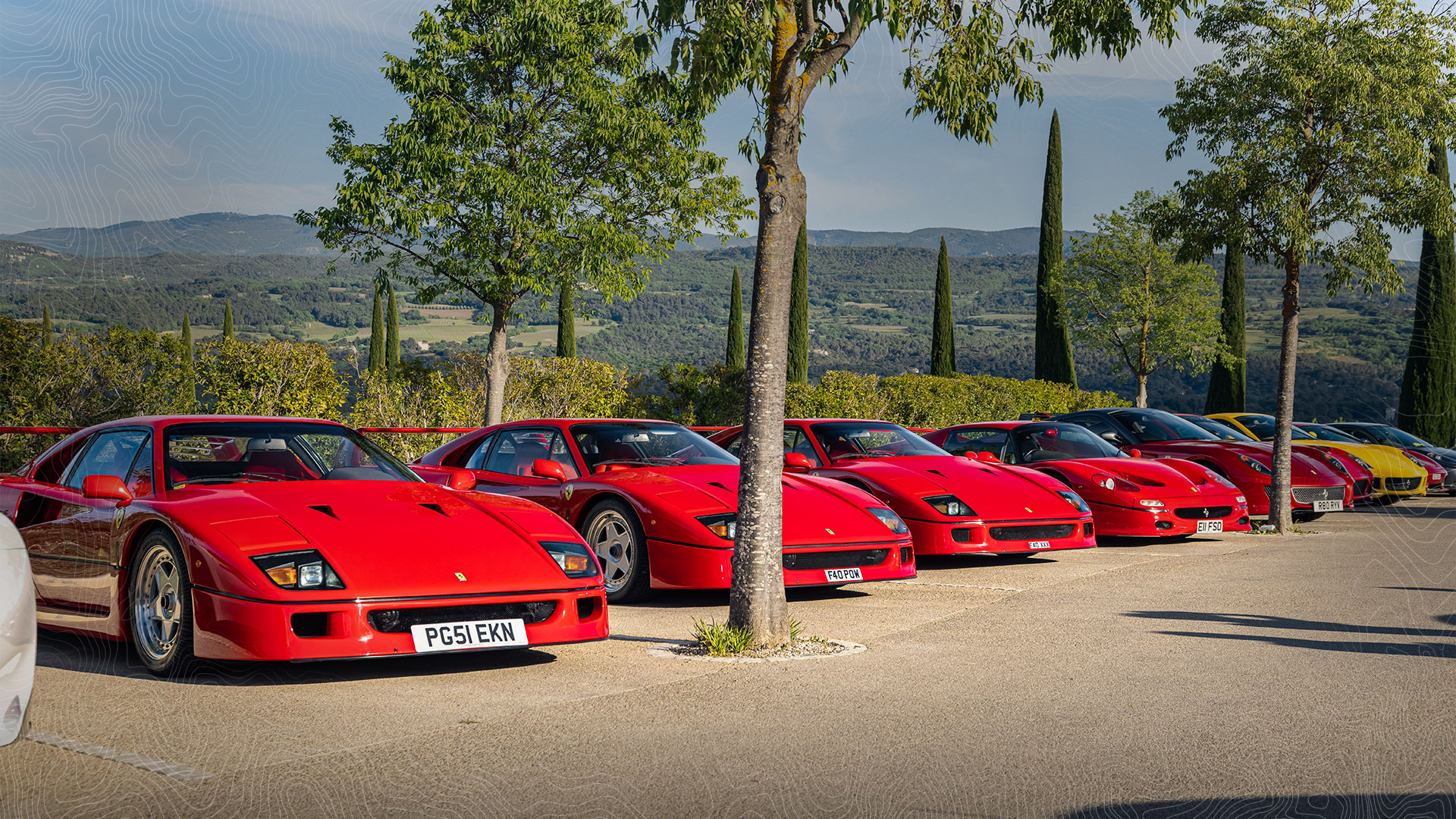
This should be automotive nirvana, yet park some of these technological miracles next to a Ferrari F40, Lamborghini Diablo, Carrera GT or even something considerably newer like a 458 Speciale, and watch what happens. People tend to walk towards the old car.
That’s weird when you think about it. It isn’t faster, it isn’t safer, and it probably isn’t as comfortable. The air conditioning may or may not work depending on whether Mercury is in retrograde, and there’s a reasonable chance that some insignificant-looking component underneath it costs the GDP of a small Caribbean island, but you still want it.
You don’t need somebody to explain why it’s special. You look at it, and something happens internally. A Diablo doesn’t require a PowerPoint presentation, and nobody ever stood looking at a yellow one and asked, “Yes, but what’s the combined system output?” You just stared at it, preferably with your mouth slightly open.

This, I think, is the test. When I was young, supercars were almost mythical objects. You might see a Ferrari once every few months, and the event was significant enough that you’d tell your mates about it at school the following morning.
"I saw an F40 yesterday."
"No you didn’t."
"I DID."
"Where?"
"On the A52."
"What colour?"
It was a Ferrari F40, Darren. What effing colour do you think it was?
These cars occupied our bedroom walls. F40. Testarossa. Countach. Diablo. Later came the F50, McLaren F1, Carrera GT, Enzo and Murciélago. They weren’t merely fast cars; they looked like they’d arrived from somewhere else.
The Countach looked as though an alien civilisation had designed a doorstop, while the Diablo looked genuinely dangerous even when parked. The F40 looked unfinished because, essentially, it was. Ferrari seemingly got halfway through building it, realised paint and carpets weighed something and decided, “That’ll do”. And we adored them.
Now imagine being 12 years old today, and somebody shows you an SF90. It’s an extraordinary car, staggeringly fast and technically astonishing, but does a 12-year-old go home and spend six months trying to convince his mum to buy him a poster of one?
I’m not convinced, and the interesting thing is that today’s younger enthusiasts don’t necessarily want the newest stuff either. They’re lusting after the cars we lusted after: E30 M3s, Integrales, air-cooled 911s, F40s, Diablos, 360 Challenge Stradales, Carrera GTs, manual Lamborghinis and 458 Speciales.
We’ve somehow reached a point where the generation who never experienced these cars when they were new is nostalgic for them too, except that technically it can’t really be nostalgia. You can’t be nostalgic for something you weren’t there for. They simply think they’re cooler, which is deeply inconvenient for the theory that we’re all just getting old.
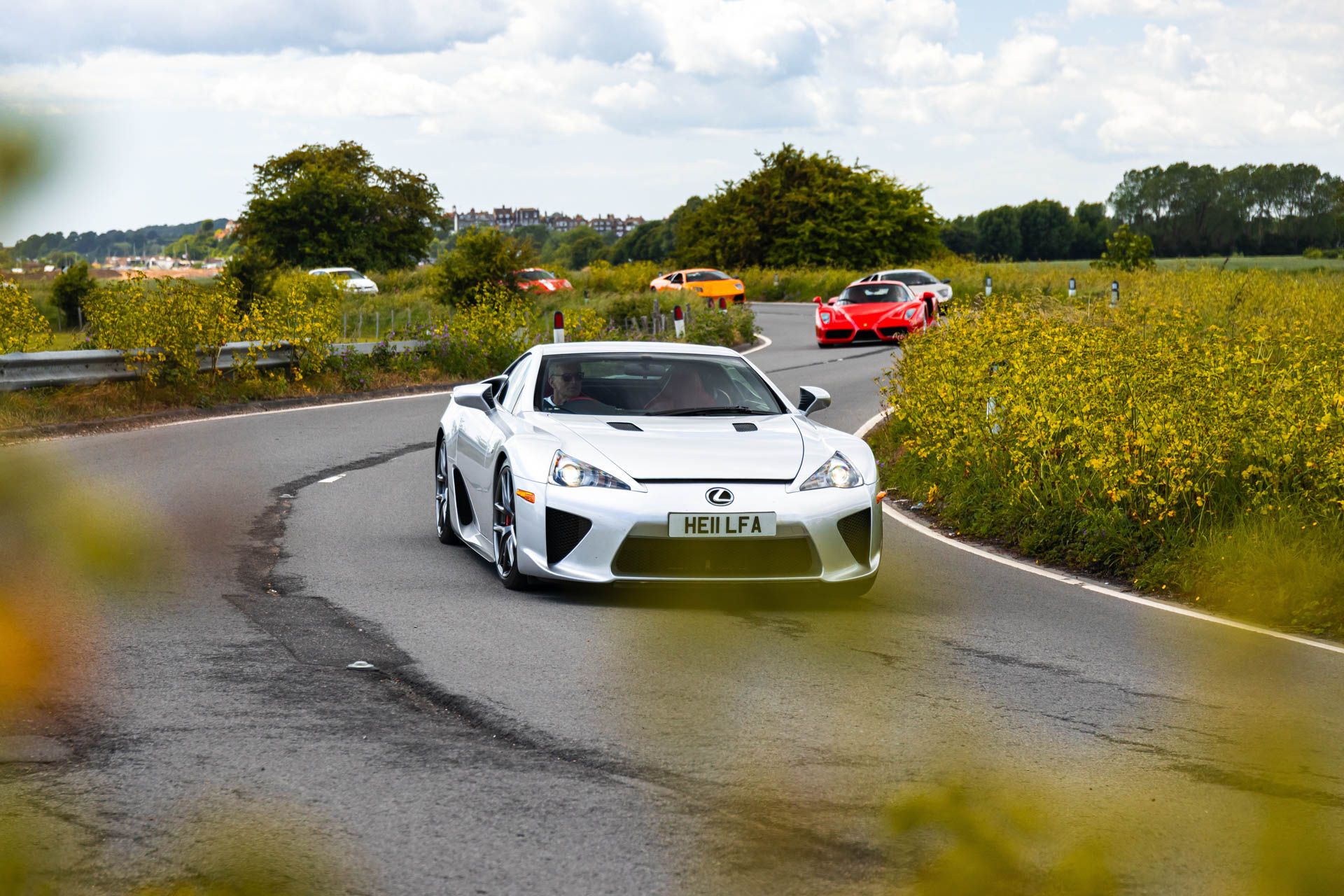
I’ve been thinking about this a lot recently, and I keep coming back to roughly 2016 as the point where the supercar world may have peaked. Not because every great car existed in 2016, obviously, but because that period gave us an extraordinary combination of old-school emotion and modern capability.
Ferrari had recently given us the 458 Speciale and LaFerrari. Porsche had created the 918 Spyder. McLaren had the P1 and was still making cars that felt like something genuinely new had arrived. Lamborghini had the Aventador in all its naturally aspirated V12 lunacy.
Even the normal supercars were spectacular. A 458 Italia had 570 horsepower, and I can remember when that sounded like an enormous amount. Now 570 horsepower is apparently what you need to take the children to swimming lessons.
The 458 wasn’t slow. Nobody ever climbed out of one visibly disappointed and announced that the main problem was a chronic shortage of acceleration. You revved that naturally aspirated V8 to 9,000rpm and the entire experience built towards something. The noise changed, the engine came alive, and you had to chase it.
Modern supercars have largely solved this terrible problem by giving you all of the performance, everywhere, immediately, which is technically better and sometimes emotionally worse.
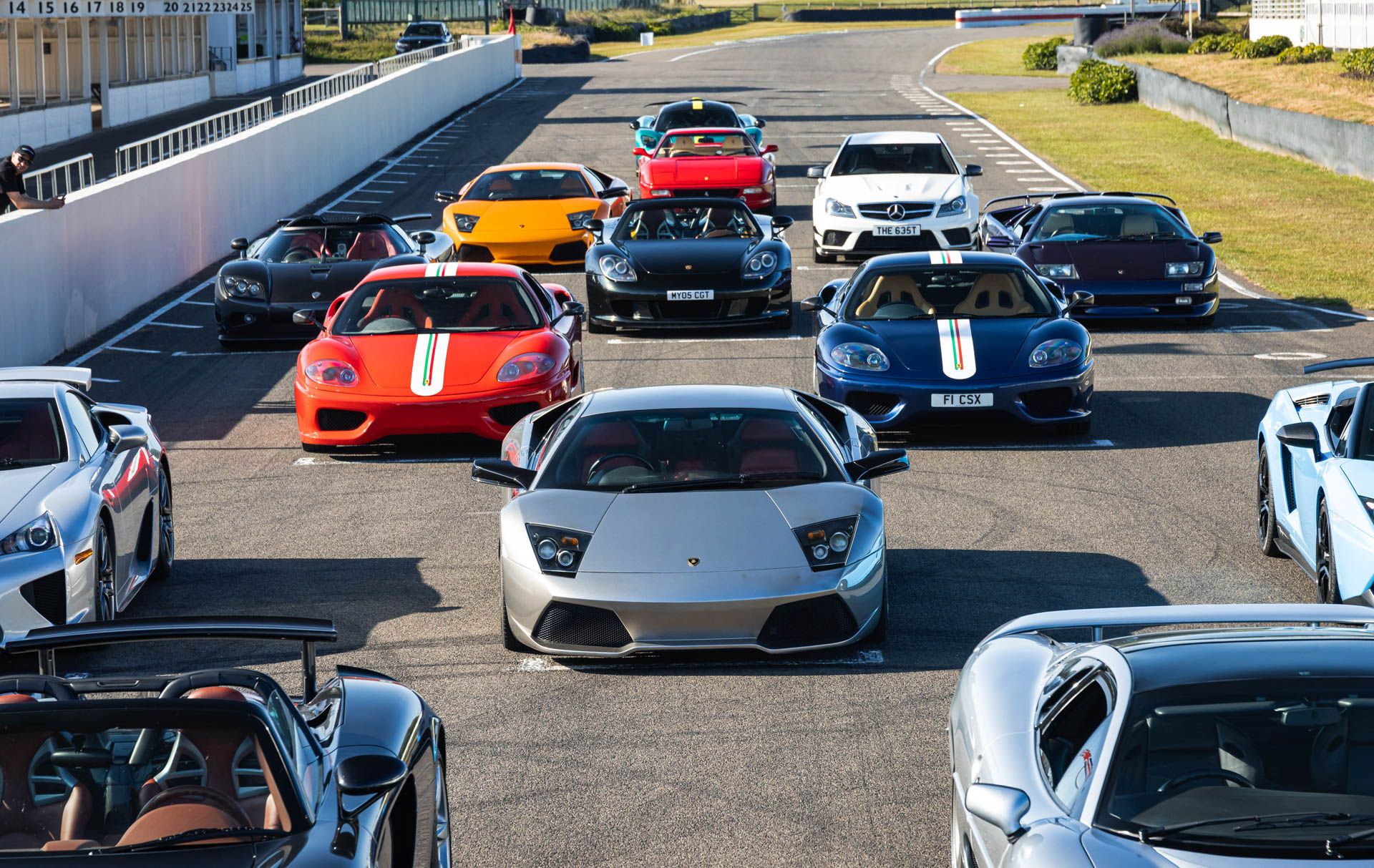
I think horsepower might actually be finished. We’ve done it. It took humanity about 140 years, but we’ve finally reached the point where we have enough.
A modern hybrid supercar can deploy so much torque so quickly that full throttle becomes less of an experience and more of a medical event. You press the accelerator, and your internal organs briefly relocate towards the boot, while the speedometer begins displaying numbers that are usually followed by a lengthy roadside conversation and an awkward phone call to your solicitor.
The numbers are astonishing, but the opportunities to experience them are tiny. In an older car, you could enjoy the journey through the performance. You’d work an engine, find the power higher in the rev range, listen to it build and perhaps even change a gear yourself like some sort of Victorian. Now you squeeze the throttle for three seconds, and you’re travelling at a speed that requires either a racetrack or a very understanding magistrate.
Then there’s the strange paradox of competence. Modern cars have become so extraordinarily capable that they can remove some of the jeopardy that made older cars memorable. An F40 doesn’t need 1,000 horsepower to have your full attention. It has 478, but 478 horsepower in an F40 feels like it has been delivered to the rear wheels by somebody throwing a lit firework into the engine bay. There’s turbo lag, noise and steering that isn’t constantly checking with a computer whether you really meant that. There are no electric motors quietly filling torque while the turbos wake up. You’re involved in the whole slightly ridiculous process.
A modern supercar works extremely hard to make you look talented, whereas an old one occasionally feels as though it would quite happily kill you. I’m not suggesting attempted murder is a desirable vehicle characteristic, but you certainly remember the relationship.

This might be the biggest problem of all. Modern supercars often look incredibly complicated, with holes everywhere, aero channels, flicks, ducts, splitters, active flaps and vents inside vents that appear to lead to another, slightly angrier vent.
Some modern performance cars look as though the designer finished the body at lunchtime and then somebody from aerodynamics attacked it with a Stanley knife. I understand why. Air has become part of the engineering, and every surface is doing a job, whether that’s cooling batteries, reducing drag, creating downforce or managing pressure. It’s incredibly clever, but nobody ever had to explain the rear wing of an F40. It was enormous because enormous rear wings are brilliant.
The Diablo had those ridiculous scissor doors because normal doors were apparently insufficiently theatrical, while a Countach is basically a collection of straight lines assembled by a man who had recently developed a personal hatred of curves.
These cars had silhouettes. You could draw them from memory, and that is incredibly difficult to achieve. Perhaps that’s why they remain so powerful decades later. Their designers weren’t trying to visually communicate seventeen different aerodynamic functions. They were trying to make a child point at the car and lose his mind.

I don’t think the problem is simply electrification. Electric motors are incredible tools for performance cars. They provide instant torque, fill gaps in power delivery and allow engineers to do things with four-wheel-drive systems that would have sounded like witchcraft 20 years ago.
The problem comes when the technology becomes the experience rather than supporting it. Nobody fell in love with a Carrera GT because of its control systems. You fell in love because it had a V10 that sounded like God had accidentally stepped on a Lego brick. Nobody loves an F40 because of its infotainment either, largely because it doesn’t have any. The infotainment is wondering whether the turbos are going to arrive before or after you run out of road.
The great cars have always had a defining characteristic that you can explain without quoting statistics. Mention an F40, and you think savage. A Diablo is outrageous. With a Carrera GT, it’s that engine. With a 458 Speciale, it’s the response. And with an LFA, it’s that noise.
Ask somebody why the latest hybrid supercar is extraordinary and sometimes the explanation becomes considerably longer. “Well, it’s got a 4.0-litre twin-turbocharged V8 combined with three electric motors and an eight-speed dual-clutch gearbox giving a total system output of…” Sorry, I’ve wandered off. There was a Diablo outside.
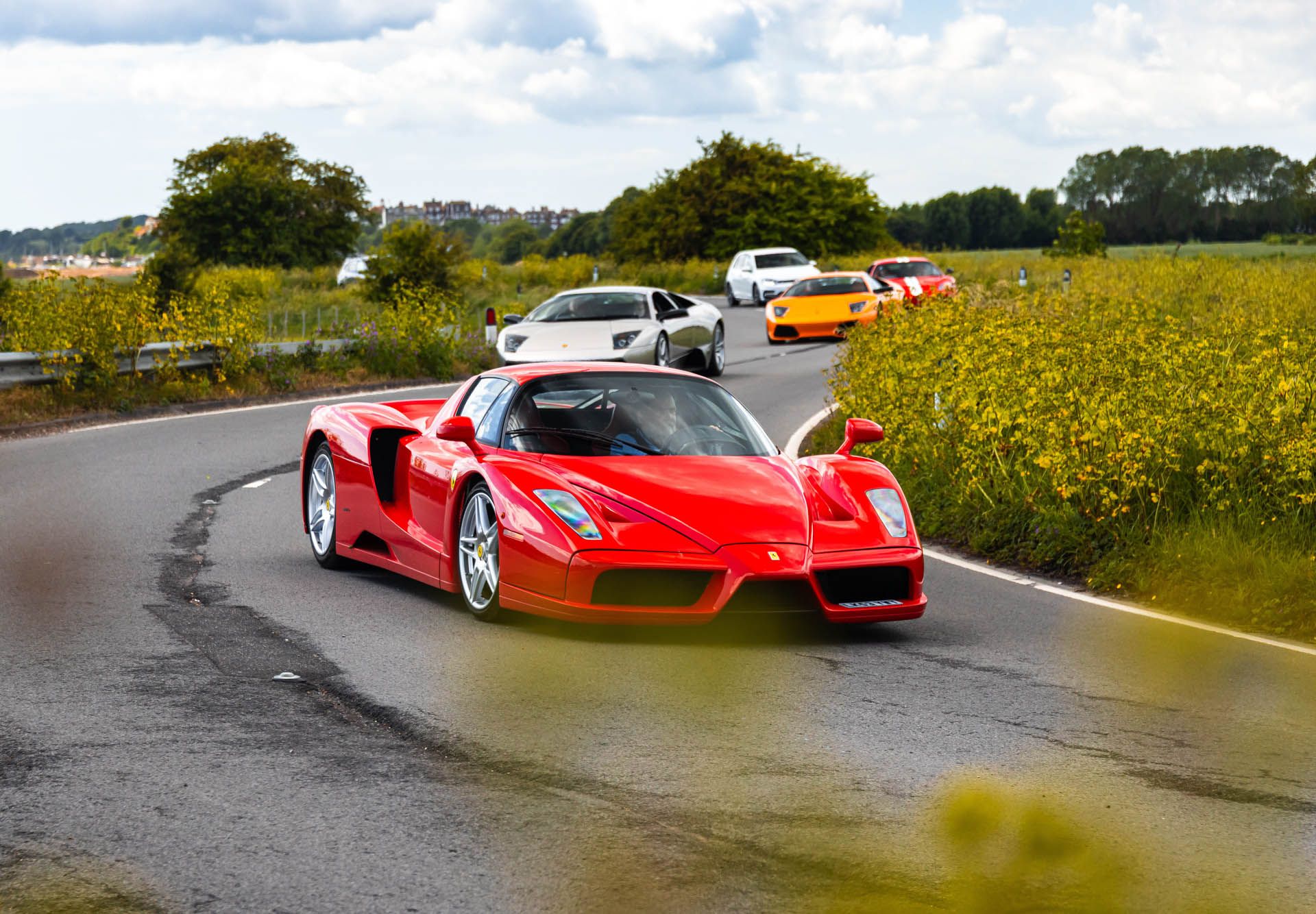
That’s the bit I find fascinating, because for most of automotive history the new car was the desirable car. People didn’t generally stand outside a Ferrari dealership in 1995 saying, “That F355 is nice, but I’d rather have the 308 from 20 years ago”. The new thing represented progress.
Today, somebody could walk into a dealership with enough money to buy virtually any new supercar and genuinely decide they’d rather have something ten, 20 or 30 years old, not because it’s a better investment or because it’s rarer, but simply because they want it more. That feels different.
Perhaps we’ve reached the point where objective improvement and emotional improvement have separated. The new car is faster, but the old car makes you feel more. The new car has better brakes, more grip, more power, more downforce and more technology, while the old car is the one that makes you turn around after you’ve parked it. And isn’t that ultimately the entire point of a supercar?
These things have never made rational sense. If you want the most effective method of travelling from York to London, the answer has never been a Lamborghini Countach. A supercar exists because it makes you feel something. It should be unnecessary, inconvenient, slightly embarrassing and utterly irresistible. It should make children point, make grown adults behave like children and make you open the garage door for absolutely no reason other than to look at it.
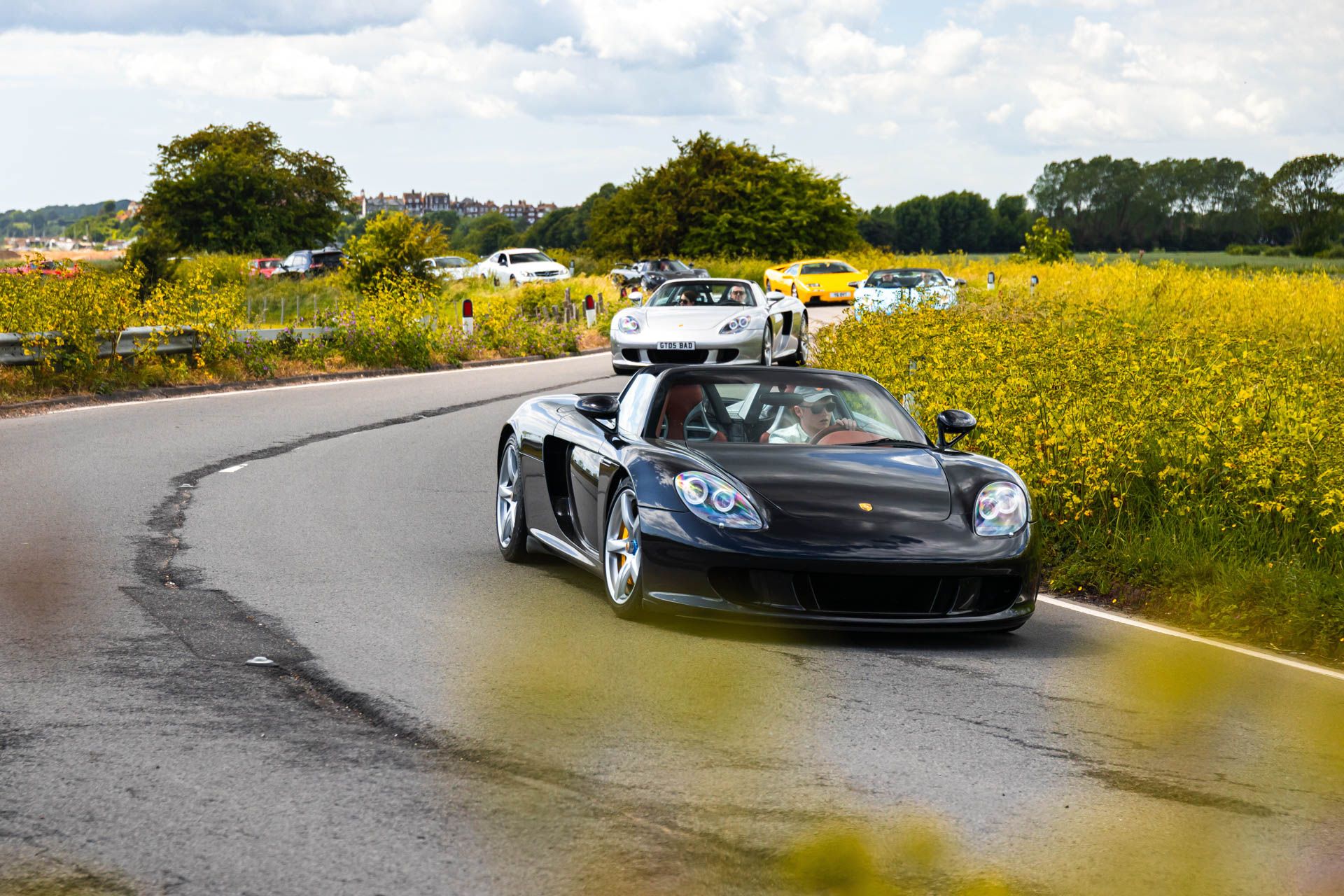
And so we arrive at the uncomfortable truth. We’re doing it. We’re standing around at car meets talking about naturally aspirated engines, hydraulic steering and manual gearboxes while younger people politely listen to us explain that cars were better before everything became digital.
We tell them that cars had more character, sounded better and required you to actually drive them, and somewhere in the middle of explaining how much better everything was in our day, the horrifying realisation arrives.
Oh Christ. It’s happening. Give it another five years and we’ll be wearing beige trousers while explaining to a 19-year-old that you used to be able to buy a Ferrari 458 for £100,000. He’ll look at us exactly the way we looked at our dads, except there’s one crucial difference. He might actually agree with us.
Because he doesn’t necessarily want the newest 1,200 horsepower hybrid hypercar either. He wants a manual Murciélago, a Carrera GT or an F40. He wants the cars that made us stop, stare and dream when we were younger, despite having grown up in an era where cars exist that would absolutely annihilate them on paper.
Maybe that’s the answer to all of this. We’ve spent decades making supercars faster, safer, cleverer and more capable, and somewhere along the way we discovered that those things aren’t necessarily what makes us fall in love with them.
Perhaps 2016 really was somewhere around the sweet spot, when cars were modern enough to be brilliant, analogue enough to still feel special and powerful enough to terrify you without requiring three electric motors and a degree in electrical engineering. Or perhaps I’m just getting old.
Maybe in 30 years’ time, today’s children will be standing around staring lovingly at an SF90, reminiscing about the good old days when cars had steering wheels, and humans were still allowed to drive them. They’ll run their hands across its bodywork, gaze wistfully into the distance and tell their children that they simply don’t make them like they used to.
And their children will roll their eyes and mutter: “Yeah, whatever, Dad”.