Feature
The Most Expensive Thing Ever Lost at Walking Pace
Jaguar’s $300,000 Monaco diamond stunt was outrageous enough. Then the car crashed, the diamond vanished, and an F1 mystery was born.
September 17, 2026

Finding chocolate is great, but have you ever found a €16 Million Ferrari 250 GT SWB California Spider?
There are Easter egg hunts, and then there are discoveries that feel as though they have been waiting patiently for decades, tucked away just out of sight, knowing that one day someone will open the right door, brush away the dust, and realise that what they have stumbled upon is not just valuable, but extraordinary.
This is one of those stories.
It begins, as many great automotive tales do, not with a roar of engines or the flash of a starting light, but with silence. A long, uninterrupted silence that settled over a collection of cars sometime in the late 1960s and refused to lift for nearly half a century.
The man at the centre of it all was Roger Baillon, a figure who, at first glance, does not quite fit the mould of the obsessive collector or flamboyant enthusiast. He was not chasing lap times or concours trophies. He was not building a garage to impress his friends or a portfolio to impress auction houses. What he had instead was something far simpler and, in many ways, far more ambitious – a quiet desire to preserve a slice of motoring history before it slipped through his fingers.
In the years following the Second World War, Baillon began acquiring cars that spoke to him. French coach-built machines, elegant grand tourers, curious oddities that most people would have overlooked. His plan, if you had asked him at the time, was perfectly reasonable. He would gather them, care for them, and one day present them to the public in a museum that celebrated a golden age of engineering and design.
For a while, the plan held together. Cars arrived, one by one, each with its own story, its own scars, its own quiet promise of what it might become again. They were driven, occasionally maintained, and then, as the collection grew, stored. Not in the sterile, climate-controlled environments we have come to expect today, but in barns, in outbuildings, under simple covers that did little more than keep the worst of the weather at bay.
Then, as it so often does, life intervened.
Business pressures began to mount. Money, which had once flowed freely enough to support such a project, tightened its grip. The museum remained an idea, then a plan, then a postponed ambition, and finally something that was simply no longer mentioned. Cars that had been bought with purpose were quietly pushed aside. A restoration that might have begun one summer was delayed until the next, and then the next again, until eventually it did not begin at all.
And so the collection settled.
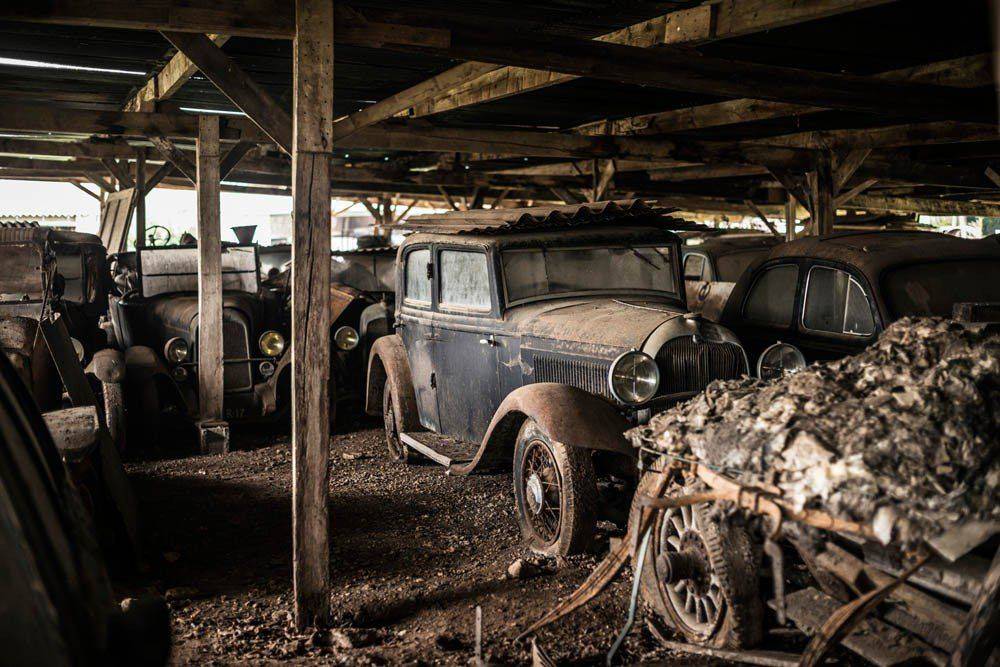
Not deliberately abandoned, not consciously forgotten, but left in a kind of limbo where intention no longer translated into action. The barns grew quieter. The doors were opened less often. Dust gathered, first as a light film and then as something thicker, heavier, more permanent. Outside, grass crept closer, then higher, until some of the cars seemed less parked than planted, as though they might one day take root.
Years passed. Then decades.
By the time Baillon died in 2000, the collection had already slipped into obscurity. It was no longer part of the conversation. It did not appear in magazines or auction catalogues. It simply existed, hidden in plain sight on a property in western France, waiting for someone to ask the right question.
That question, when it came, was not particularly dramatic. It did not arrive with fanfare or anticipation. It came as part of the quiet, practical process of sorting through an estate. What, exactly, had been left behind?
When the specialists arrived, they did so with modest expectations. A handful of cars, perhaps. A few interesting pieces. Something worth cataloguing, certainly, but nothing that would rewrite headlines.
What they found instead was something altogether different.
Barn doors were opened, slowly at first, as though there might be nothing behind them at all. Light filtered in, cutting through years of dust, revealing shapes that were at once familiar and completely surreal. There were cars, yes, but not in the way anyone had expected to see them. They sat close together, some partially hidden, others exposed, each one bearing the unmistakable marks of time.
There were more doors, more spaces to explore, more structures to enter. And with each one, the same realisation began to take hold.
This was not a handful of cars.
This was a collection.
A vast, uncurated, completely untouched collection of more than one hundred vehicles, many of them rare, some of them immensely valuable, all of them preserved not by design, but by circumstance.
It felt less like a discovery and more like an excavation.
Among the many shapes and silhouettes, one in particular stood out, even beneath its layers of dust and neglect. The lines were unmistakable, even in that condition, even after all those years. When the covers were pulled back and the details began to emerge, the significance of it became impossible to ignore.
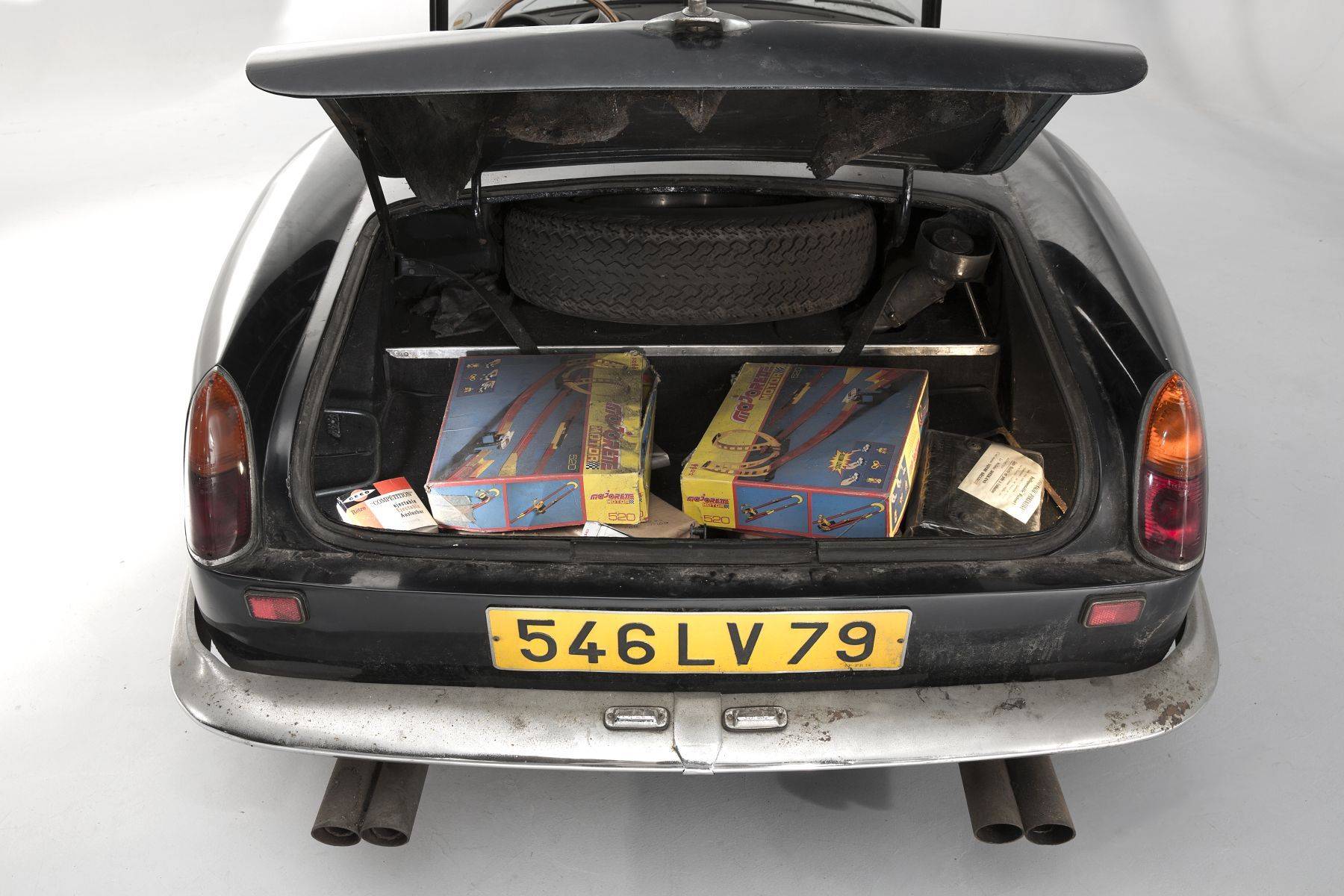
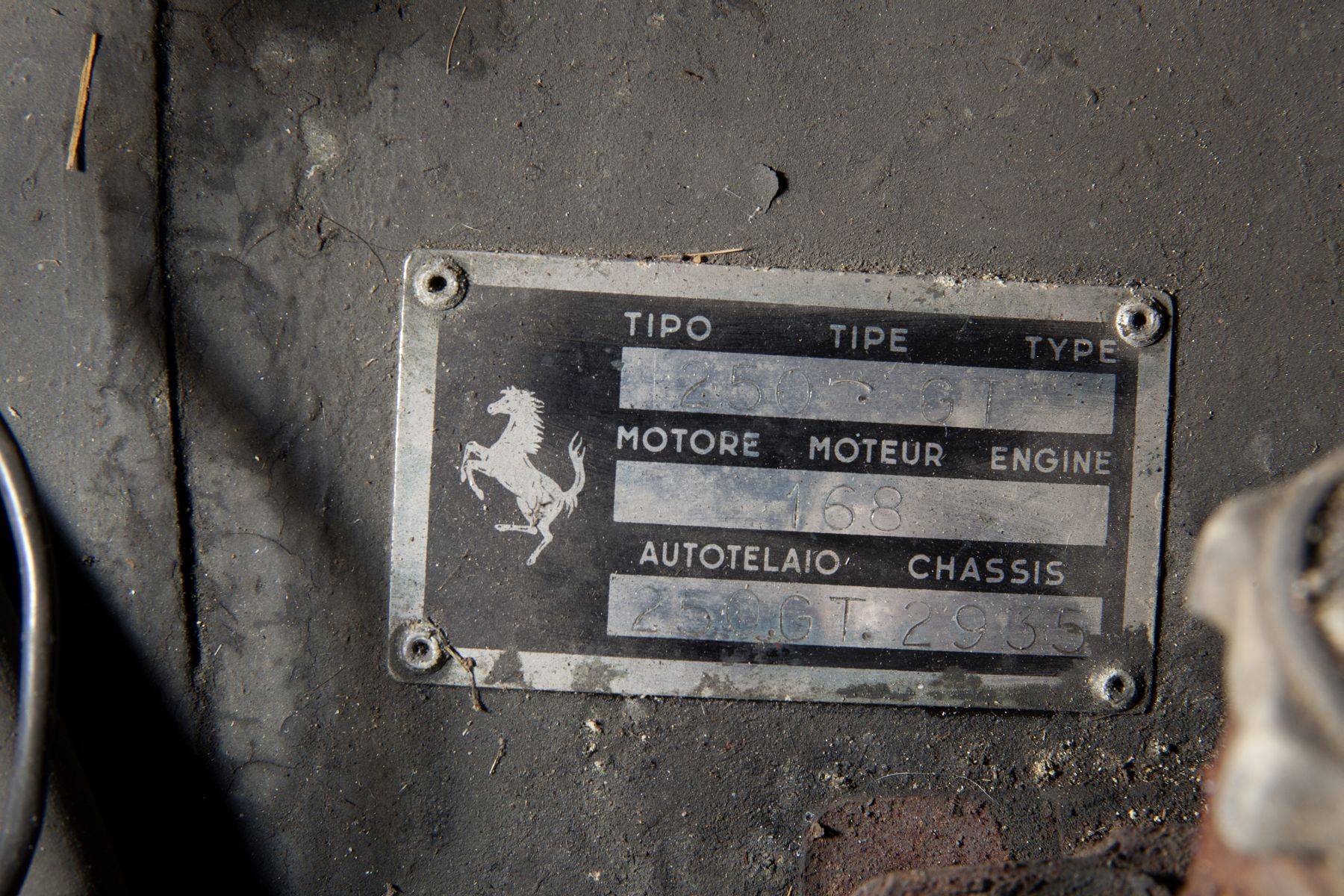
It was a Ferrari 250 GT SWB California Spider.
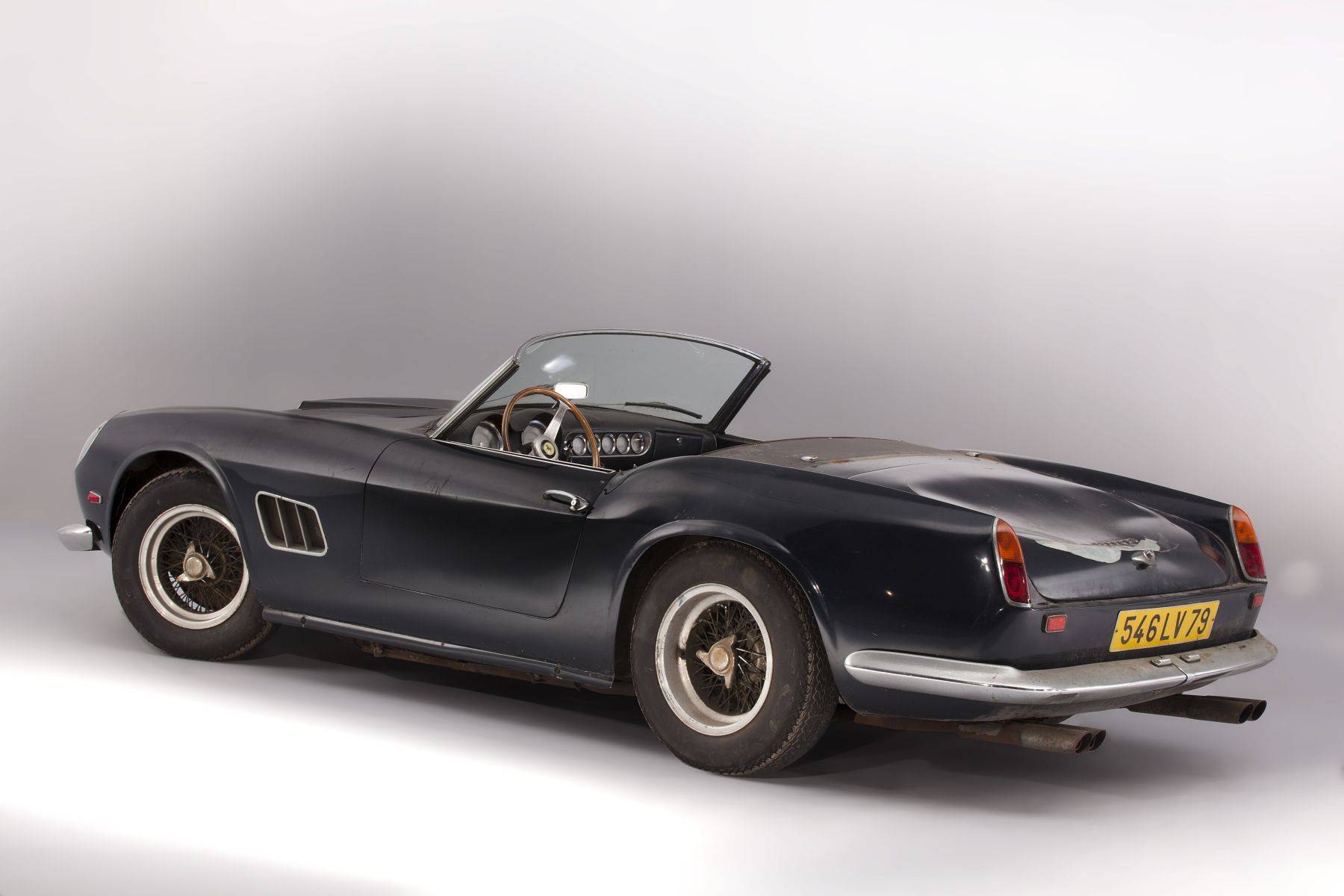
Not simply a Ferrari, but one of the most desirable Ferraris ever built. Short wheelbase, open top, a car that combined elegance with purpose in a way that few others have ever managed. Only a small number were produced, and here was one, sitting quietly in a barn, as though it had been waiting for this moment all along.
Its history only added to the sense of disbelief. At one point, it had belonged to Alain Delon, a name that carried its own weight and glamour. And yet here it was, not under lights or behind ropes, but covered in dust, its paint dulled, its presence almost understated in the context of its surroundings.
And it was not alone.
Elsewhere in the collection were cars that would have been centrepieces in any other setting. A Maserati A6G Gran Sport with its delicate proportions and racing pedigree. A Talbot-Lago T26 Grand Sport, coach-built and unmistakably French in its character. A Bugatti Type 57 Ventoux, representing a lineage that has long since passed into legend. And a Hispano-Suiza H6B, a reminder of a time when luxury and engineering were inseparable.
Some of the cars were complete. Others were fragile, their structures weakened, their details lost or obscured. A few looked as though they might never return to the road. But taken together, they formed something far greater than the sum of their parts.
They told a story.
A story of ambition that had outgrown its circumstances. Of a collection that had been assembled with care and then left to the mercy of time. Of a man who had intended to preserve history and, in doing so, had inadvertently created one of the most remarkable time capsules the automotive world has ever seen.
When the collection was finally brought to auction in 2015, the world was watching.
There was a sense of curiosity, certainly, but also of uncertainty. What would these cars be worth in this condition? Untouched, unrestored, bearing every mark of their long slumber?
The answer came quickly, and it surprised almost everyone.
That same Ferrari 250 GT SWB California Spider, still wearing its dust and its history, sold for around sixteen million euros. Not because it had been restored to perfection, but because it had not. Because it carried with it a story that could not be replicated, a provenance that had been shaped not by careful curation, but by decades of quiet neglect.
Across the collection, the total climbed beyond twenty-five million euros.
Cars that had once been hidden, overlooked, and left to fade had suddenly become some of the most sought-after machines in the world.
And then, just as quietly as they had been discovered, they began to disperse.
Some found their way into the hands of collectors who saw not just value, but responsibility. Others were entrusted to specialists, their restoration approached with a care that acknowledged both their significance and their fragility. A few were preserved exactly as they had been found, their worn surfaces and faded finishes treated not as flaws, but as features.
That Ferrari, once hidden in a barn, now exists in a world where it is recognised for what it is. Celebrated, admired, studied. Its years of silence now part of its identity rather than something to be erased.
The others have followed similar paths, each one carrying forward a piece of the story that began with a simple idea and unfolded into something far greater.
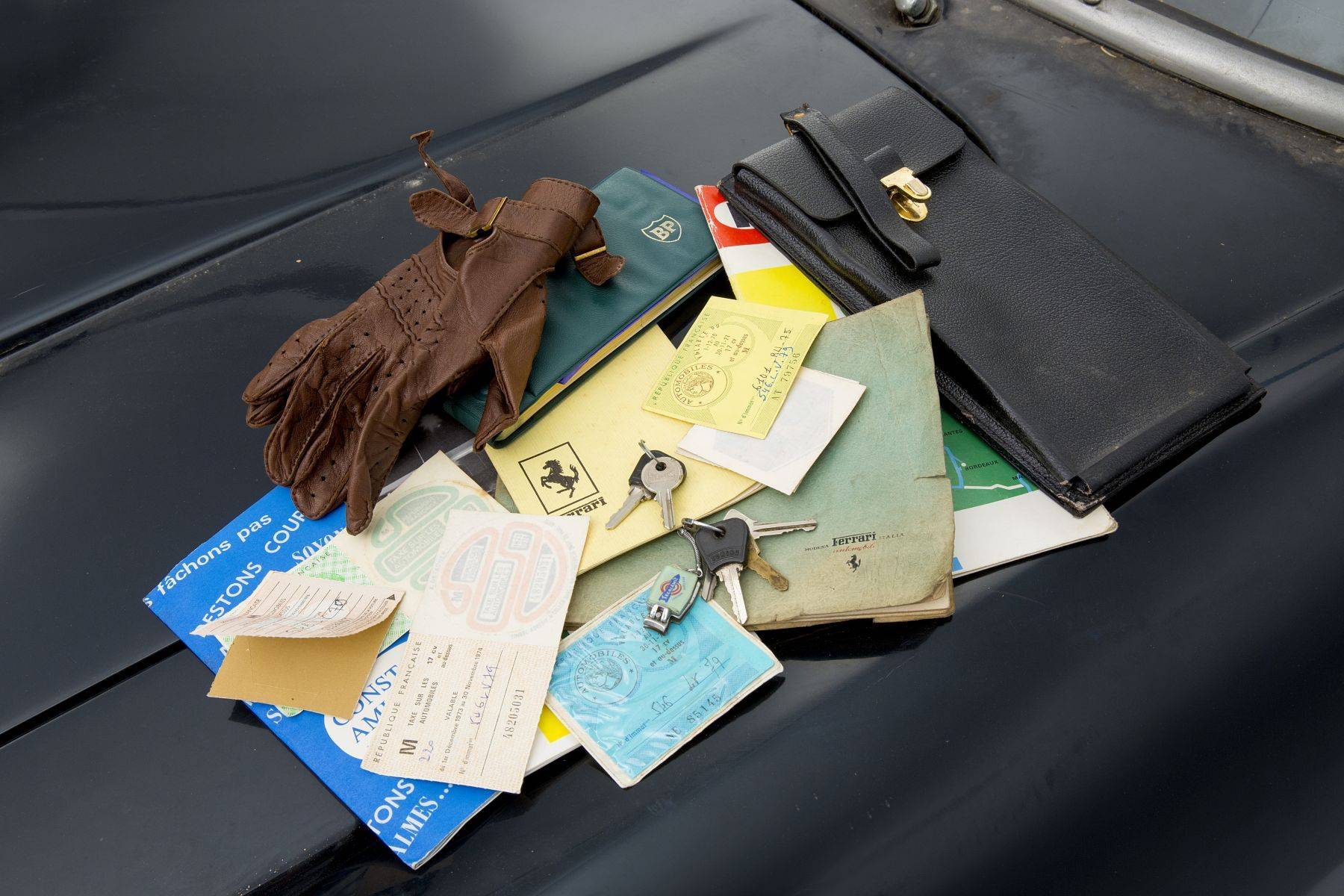
What makes this discovery so compelling is not just the value, though that alone would be enough to capture attention. It is the sense that, for a moment, time allowed something to slip through its grasp. That in a world where everything is documented, tracked, and accounted for, an entire collection of cars was able to disappear, to exist outside of that system, and then to return, fully formed, decades later.
It is, in every sense, the perfect Easter egg.
Not because it was hidden deliberately, but because it was hidden completely. Not because anyone was looking for it, but because no one knew to look at all.
And that is perhaps the most intriguing part of the story.
Because if this could happen once, if a collection of this scale and significance could sit quietly for half a century before being rediscovered, then it raises a question that is difficult to ignore.
What else is out there?
Not necessarily another hundred cars, not necessarily another collection of such obvious value, but smaller stories, quieter ones. A garage that has not been opened in years. A project that was paused and never resumed. A car that has been waiting, patiently, for someone to remember it.
Somewhere, there will be another door.
And behind it, perhaps, another Easter Egg waiting to be unwrapped.
View the original listing and gallery
Written by: Paul Pearce
Photographs Coutesy of Artcurial