Feature
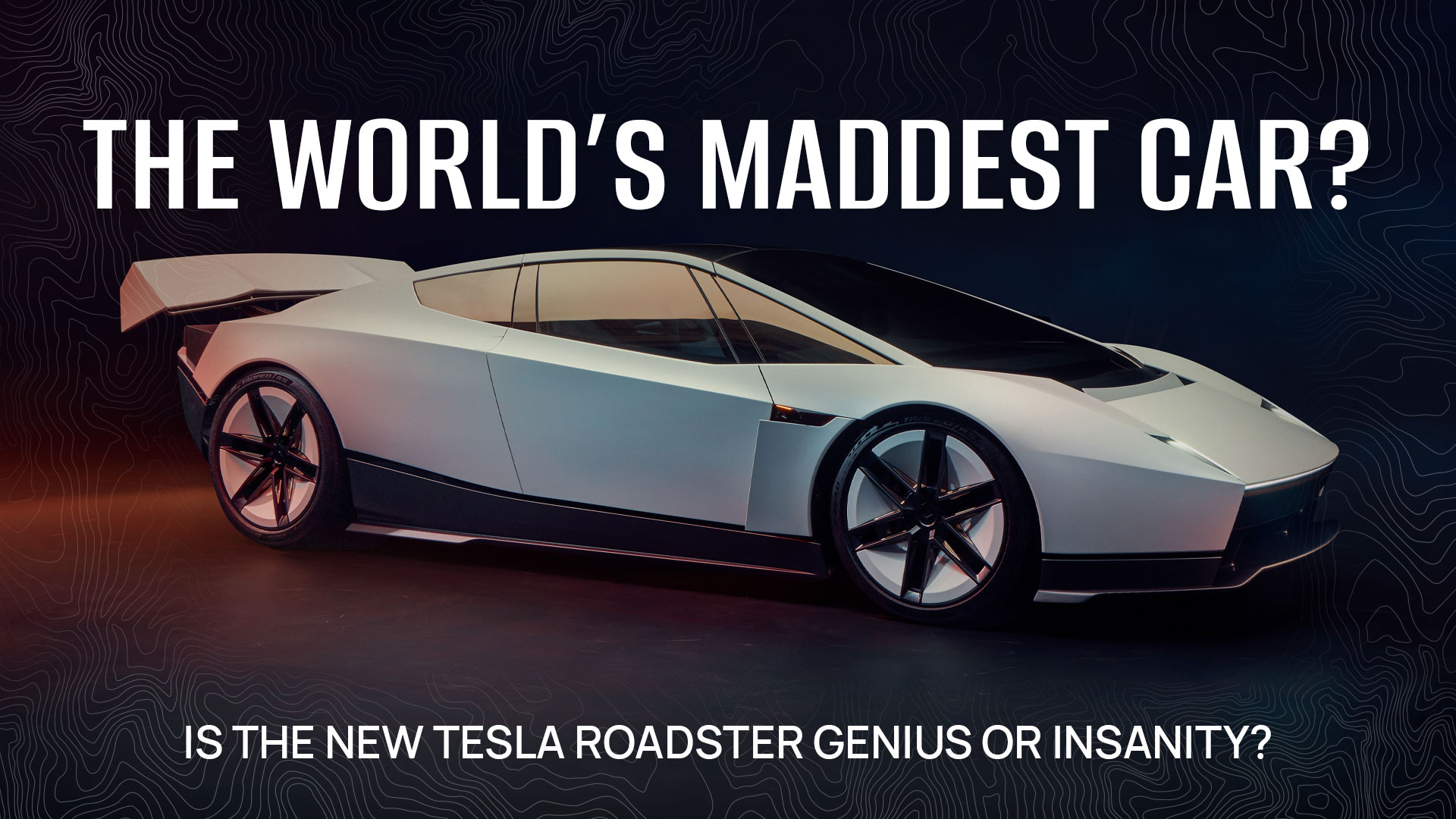
The New Tesla Roadster — Genius or Insanity?
The Tesla Roadster: Or how Elon Musk spent nine years inventing a car that can do a backflip, drive on the ceiling and make absolutely no sense whatsoever.
October 19, 2026
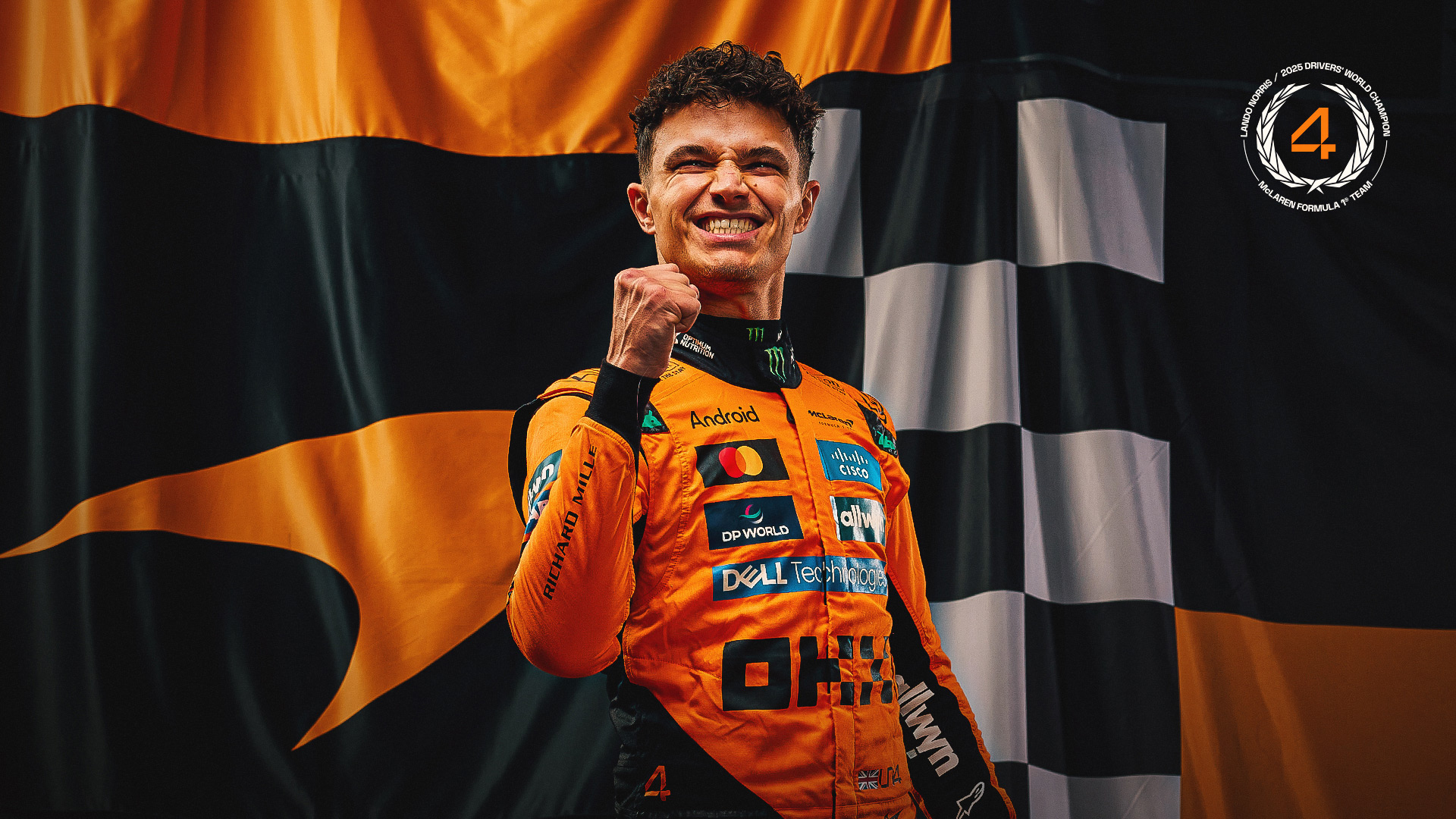
Paul celebrates the story and the nation's pride of Britain's latest Formula 1 World Champion.
On the morning of 8 December 2025, Lando Norris woke up in Abu Dhabi as Britain’s newest world champion. Less than 24 hours earlier, he had been strapped into his McLaren, heart hammering, staring at five red lights. Now he lay in a hotel room, phone buzzing non-stop, a gold FIA cap on the bedside table and a Union Jack folded over a chair. The adrenaline was fading, but the reality was settling in.
He had done it. Third place in the Abu Dhabi Grand Prix. First place in the world. Britain’s 11th Formula One world drivers’ champion.
Down the road at Yas Marina, the McLaren trucks were being packed. In quiet corners, mechanics who had been with the team through the lean years still smiled to themselves. Back home, Britain was going to work on a cold December morning, half listening to radio news bulletins talking about “our new world champion”, that small word “our” doing a lot of heavy lifting.
The pictures from the previous night already felt iconic. Under the Abu Dhabi floodlights, Lando stood on the podium with a third-place trophy in his hands and a flag around his shoulders. Max Verstappen had won the race, Oscar Piastri had finished second, but the maths belonged to the lad from Bristol. Two points. That was the margin in the standings: 423 to 421. A whole season of risk and sweat boiled down to the difference between fourth and fifth place.
Below the podium, his parents were exactly where they had been when this all began: together, watching their boy. Adam, the quietly intense Bristolian who had made a fortune in pensions and start-ups. Cisca, the warm, sharp Flemish Belgian who gave him his unusual first name and his stubborn streak. Around them were his siblings: older brother Oliver, who first dragged a young Lando into the karting world, and his younger sisters Flo and Cisca, who long ago learned to roll their eyes at his fame while defending him fiercely when anyone took a cheap shot.
They all knew how far they had come. Not from struggle in the usual sense — there is no point pretending this was a rags-to-riches tale. Adam’s success meant Lando never had to worry about whether they could afford a new set of tyres. His dad’s net worth has been estimated at around £200 million; his name has sat on the Sunday Times Rich List. But money only buys a seat. It does not buy pole positions. It does not buy wet-weather car control at 200 mph. It does not buy the nerve to defend a title-deciding podium with Max Verstappen looming large in your mirrors.
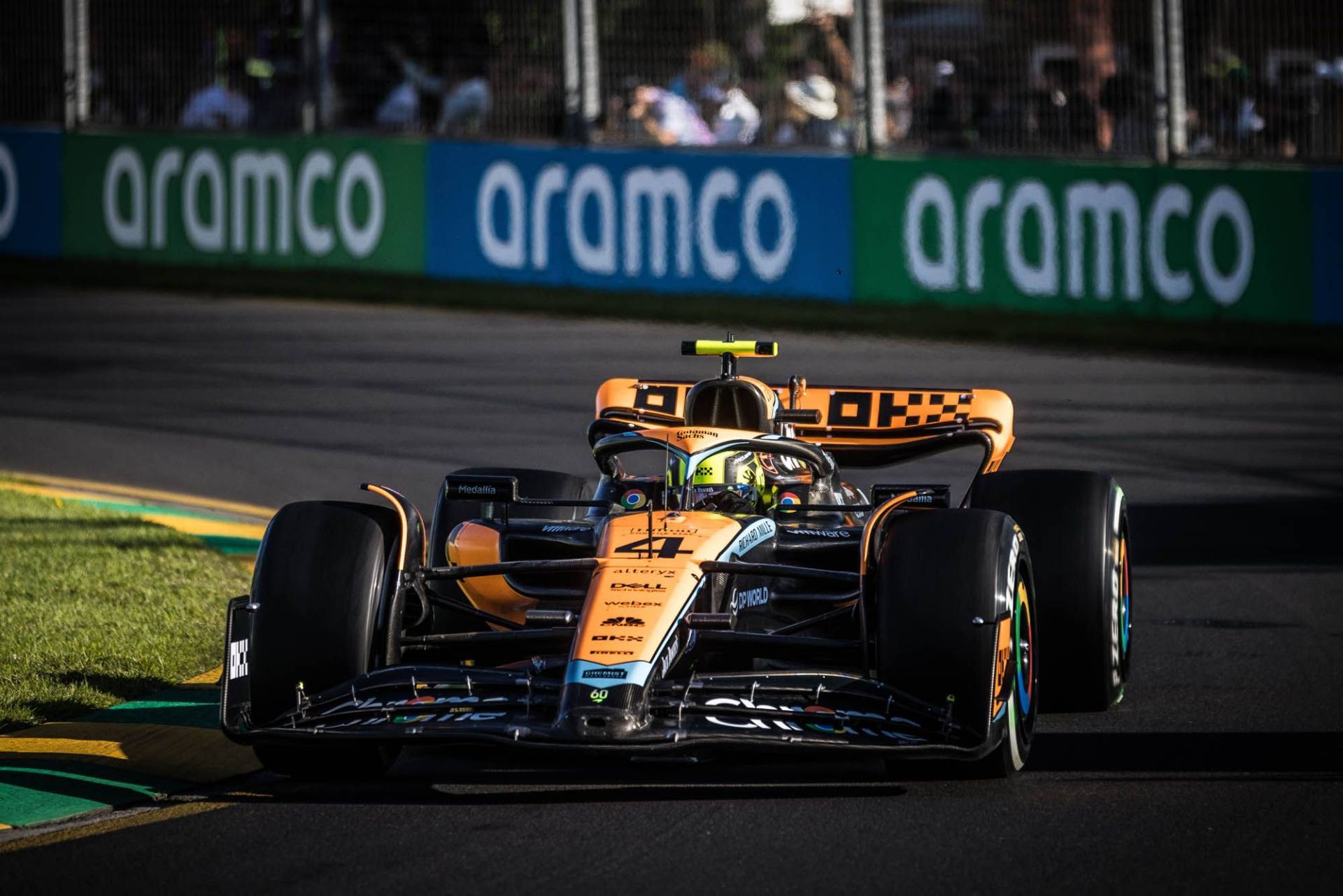
The roots of that nerve reach back to the West Country.
Lando was born on 13 November 1999 in Bristol and raised in Glastonbury, a town more famous for a music festival than a race driver. He went to Millfield School in Somerset, a place that produces Olympians and captains rather than shrinking violets. Boarding fees there cost more than some people’s annual salaries, and yet behind all that polish, you still find cold mornings, muddy fields, and lads taking the mickey out of each other for any weakness. He was slight and small for his age. On kart tracks, he was bullied for his height, teased as the little kid with the rich dad. He did what all proper racers do with that kind of treatment. He turned it into fuel.
Motorsport was not even his first love. At first, he wanted to be Valentino Rossi, not Lewis Hamilton. Two wheels, not four. His bedroom was full of Rossi yellow before it ever saw McLaren papaya. Then, when he was seven, Adam took him to watch a round of the British Super 1 National Kart Championships. That day changed everything. He watched kart after kart hammer through corners, engines screaming, drivers throwing their whole bodies into every turn, and something locked into place. He went home thinking about apexes rather than apex predators.
Soon after, he got his first kart and headed to Clay Pigeon Raceway in Dorset. The cliché says you know a talent within two corners. With Lando, it took less. He climbed into the seat, helmet slightly too big, hands barely strong enough to turn the wheel. He was quiet on the dummy grid, almost shy. Then the engine fired and it was like watching a switch flip. He took to the circuit not like a nervous child, but like someone coming back to a familiar place. He did not scream or flail. He drove. Clean lines. Calm inputs. No panic in traffic. Before long, he was setting lap times that made the regulars look twice at the timing screen.
From there came the grind that only families inside the sport truly understand. Early alarm clocks. Loading vans in the dark. Weekends swallowed by practice, heat races, finals and long drives home, win or lose. Adam says he has done around 400 races with Lando. That is 400 sets of nerves on a grid. 400 nights in motorway hotels. 400 times watching a little boy strap in, knowing that money could pay for the kart but not for the courage needed once the lights went out.
Lando’s karting results were the first clear sign this was more than a hobby. He started racing seriously at eight and, by his early teens, he was tearing up the record books. In 2013, he won the CIK-FIA European KF-Junior Championship, the CIK-FIA International Super Cup and the WSK Euro Series — three of the biggest honours in junior karting — in his first full season racing across Europe. The following year, he became the youngest ever CIK-FIA World KF champion, taking a title that Lewis Hamilton once held, but doing so at an even younger age.
To outsiders, it looked easy. To the Norris family, it was anything but. They saw the pressure of big paddocks and factory squads. They saw a boy still doing schoolwork on the road, juggling physics homework with track walks. He left Millfield before his GCSEs to focus on racing, taking on tutors instead of timetables, chasing lap times instead of exam scores. It was a privileged choice, yes, but also a brave one. Walk away from a safe path and bet everything on speed.
Even then, you could see the traits that carried him through Abu Dhabi last night. He hated letting people down more than he feared losing. He listened to his mechanics. He absorbed advice like a sponge. He was quick, but he was also clever. You could throw him into the worst conditions — slick tyres on a damp track, a kart losing grip late in a race — and he would still find a way to keep it on the road.
When he moved into cars in 2014 with the Ginetta Junior Championship, it was just a new canvas for the same brush strokes. A kid from Glastonbury, with a very rich dad, a very strong mum, three loud siblings and a very British sense of humour, was beginning the jump from anonymous kart paddocks to the sharp end of world motorsport.
The trophy in Abu Dhabi might have been shiny, but the story behind it still smelled like petrol from those little karts in Somerset.
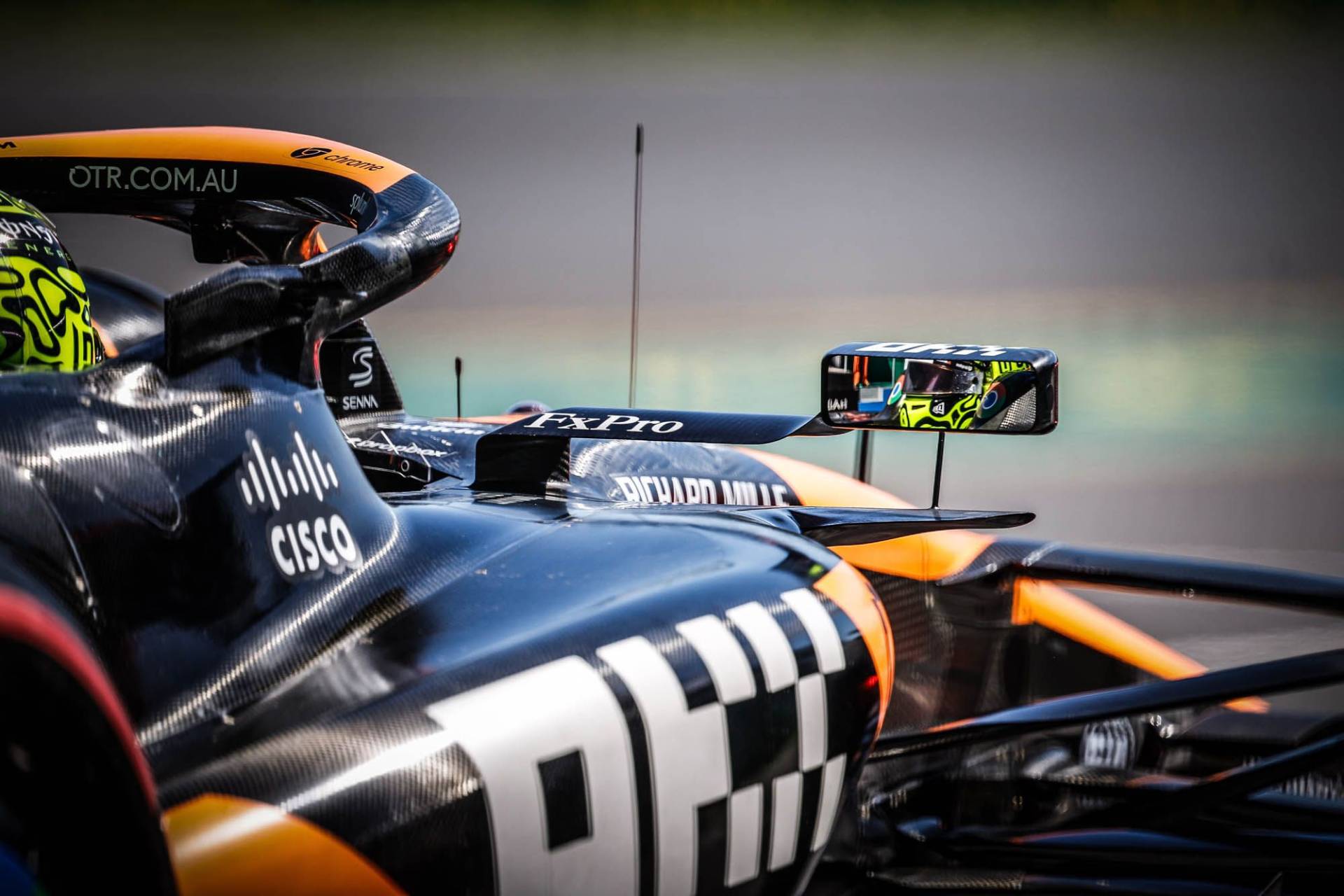
By the time most teenagers are choosing A-levels, Lando Norris had already turned his life into a straight line pointing at Formula One.
The Ginetta Junior Championship in 2014 was his first go at car racing. Thirteen-year-old Lando looked almost lost inside the fibreglass shell the first time he sat in it, yet he drove like someone who had been racing tin-tops for years. A year later, in 2015, he joined Carlin in MSA Formula — the series now known as British F4 — and won the title at his first attempt. It was Britain’s proving ground doing what it has always done: turning raw talent into refined racecraft.
In 2016, he went on a run of results that would make any junior driver jealous. He crossed the world to race in the Toyota Racing Series in New Zealand and won the championship. Back in Europe, he took both the Formula Renault 2.0 Eurocup and the Northern European Cup in the same year. He picked up the Autosport BRDC Award too — a British motorsport rite of passage that had previously gone to names like Button and Hamilton. It was as if every rung of the ladder carried a small Union Jack at the side, quietly reminding you where so much of this sport’s talent pipeline comes from.
In 2017 he stepped into the FIA Formula 3 European Championship with Carlin and beat the all-powerful Prema outfit to the title, snapping a streak that had lasted since 2012. This was classic British motorsport territory: cold mornings at circuits like Silverstone and Brands Hatch, British engineers huddled over laptops, British mechanics hammering at suspension parts on trolleys in draughty awnings. You could hear more regional accents than foreign languages. Lando was right at home.
By 2018 he was in Formula 2, again with Carlin, and again in the thick of things. He finished runner-up to George Russell, another Brit on a charge, in a duel that felt like a preview of a future we are now living in. At the same time he became a test and reserve driver for McLaren and joined their young driver programme. The kid from Glastonbury was now walking daily through the glass atrium at the McLaren Technology Centre in Woking, past Senna’s cars, past Hamilton’s 2008 machine, past proof that British engineering and British drivers together can hit heights nobody else can sustain.
His promotion to a full race seat in Formula One came in 2019. McLaren needed not just speed, but a change of mood. They had lived through tough seasons. Morale was fragile. In walked a 19-year-old who was fast, funny, honest and completely open about the fact that he was learning on the job. Fans loved him because he felt like one of them: streaming on Twitch, joking with team-mates, speaking openly about nerves and mental health. Engineers loved him because behind the memes was a driver who could give clear feedback and absorb set-up data like a veteran.
The early years were full of promise and pain. There were podiums, most famously in places like Austria and Monza, but also near-misses that stung. Russia 2021 still lives in the minds of fans: a first win in sight, rain falling, the wrong tyre call, a moment where the gods of motorsport seemed to have a cruel sense of humour. Lando sobbed into his crash helmet while Lewis Hamilton took his 100th win. Nights like that leave scars. They also build champions.
In 2024 he finally broke the win barrier in Miami, taking victory over Verstappen after 110 attempts, equalling the record for most podiums before a first win. It was classic British sports drama: years of waiting, endless “when will he do it?” questions, lectures from pundits about being “too nice”, then an explosion of joy in a city half a world away, watched by fans wrapped in flags behind sofas in Leeds, Cardiff, Glasgow and Belfast.
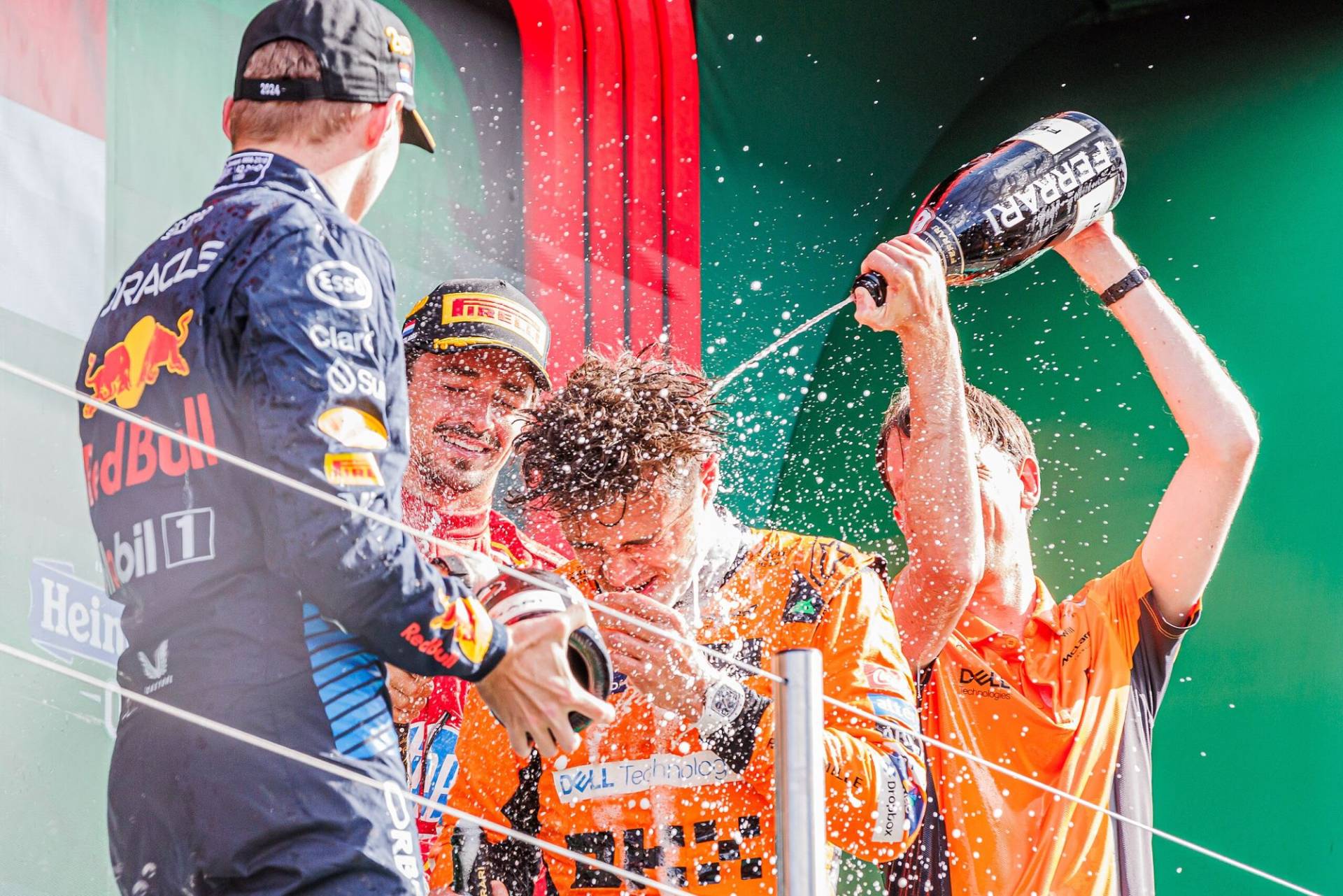
That first win unlocked something, but the title challenge that year fell short. Verstappen and Red Bull remained just out of reach, McLaren’s late surge arriving a fraction too late. Lando ended the season accepting that he had not been ready in every way, admitting he had more growing to do. It was honest. Fans recognised it as such.
What people perhaps did not see was how much British motorsport stood behind him by then. McLaren’s factory in Woking had been reborn, hundreds of British engineers and mechanics building a car that could finally fight the orange army of Verstappen, the red of Ferrari, the black and teal of Mercedes. The 2024 constructors’ title came back to McLaren after 26 years, and Lando played a leading role in it. That win for the team felt like a dress rehearsal for what happened last weekend.
The 2025 season, though, was different from the start. The McLaren was quick straight out of the box. Norris and Piastri took turns winning in the opening rounds. Verstappen clawed back form after a slow start. For long stretches, Piastri led the points and Lando had to listen to people asking whether he was about to be outdone by his own team-mate.
There were tense weekends. Austria, Britain, Monaco, Singapore. Team orders, strategy arguments, mechanical failures. The worst blow came in Las Vegas, when both McLarens were disqualified after finishing first and second, their floors failing a post-race check. Overnight, a comfortable points lead melted. Critics said the title was gone. Verstappen’s late-season charge gathered speed. Lando admitted he had made mistakes earlier in the year, spoke about the mental load of a title fight, and still turned up at every race with that same grin, that same willingness to take responsibility when things went wrong.
Through all of this, one British story threaded its way quietly through the bigger one. As Lando fought for his first title, he did so in a sport where Britain’s fingerprints are everywhere.
Eleven British world champions now. 21 drivers’ titles between them, more than any other country. From Mike Hawthorn in 1958 to Graham Hill, Jim Clark, John Surtees and Jackie Stewart in the sixties and seventies. From James Hunt’s wild 1976 win to Nigel Mansell’s moustachioed glory in 1992. From Damon Hill in 1996 to the Hamilton in 2008, Button in 2009 and the Hamilton era that followed. Now the roll call finishes, for the moment, with Lando Norris, the latest name in a sequence that makes British motorsport fans stand a little straighter.
Britain does not just produce drivers. It houses teams. McLaren in Woking, Mercedes in Brackley, Red Bull in Milton Keynes, Aston Martin by Silverstone, Alpine in Enstone, Williams in Grove, Haas in Banbury. A whole grid’s worth of genius dotted around a small patch of this island. Wind tunnels hum in Northamptonshire while rain lashes down outside. Composite shops in Oxfordshire cure carbon fibre through the night. Machine shops in Surrey turn billets of metal into title-winning suspension parts. For a boy like Lando, Britain was not just his passport. It was the ground under his feet at every step.
All of that history, all of that expertise, all of those years of effort from thousands of British men and women led, in some small way, to what happened when the lights went out in Abu Dhabi.
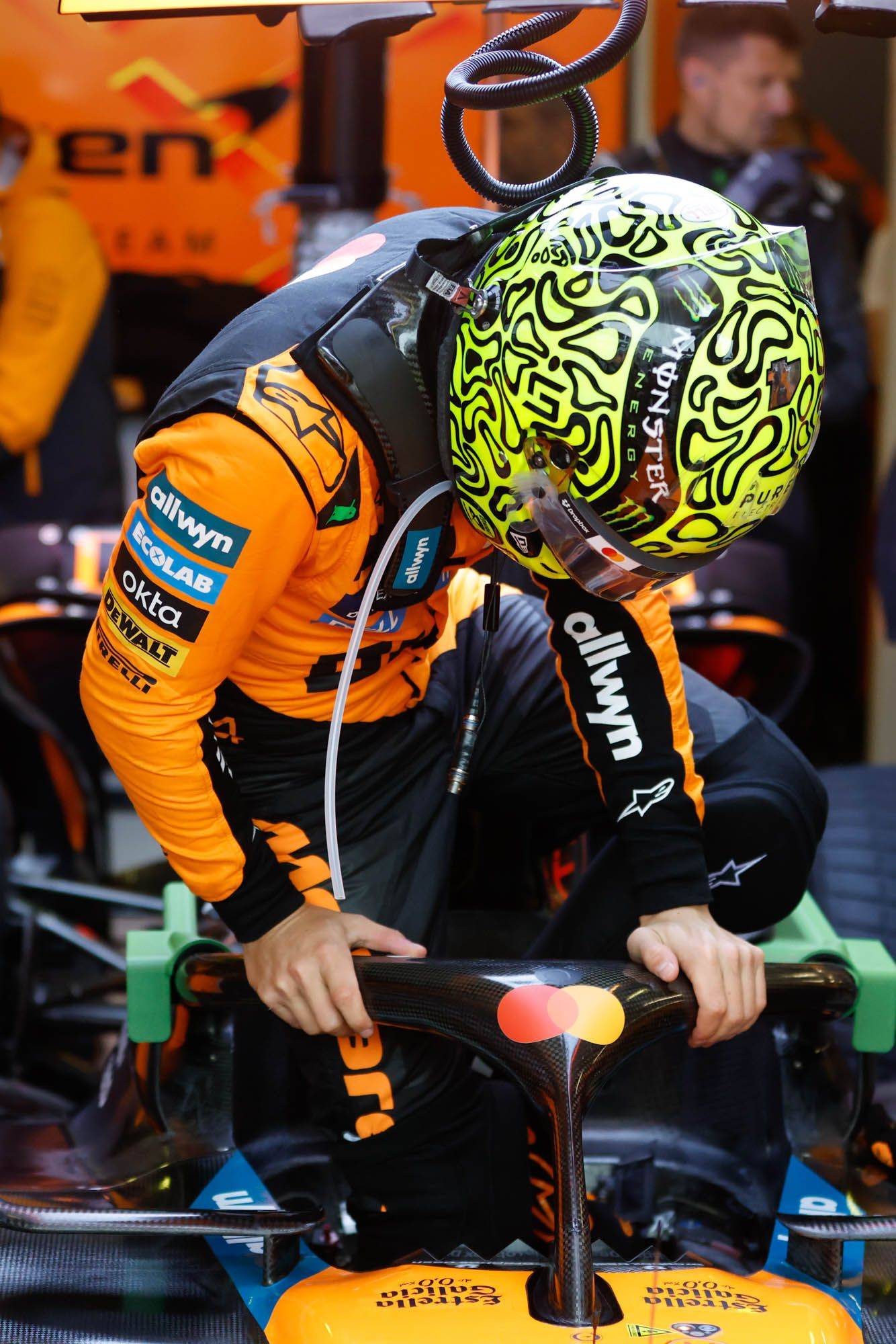
The final round at Yas Marina began with numbers. Lando leading the championship. Verstappen close behind. Piastri still in range. Each points scenario calmly laid out on screens at McLaren, endlessly re-run on television graphics back home. It might have looked like spreadsheets and simulations, yet inside the cockpit it was much simpler.
Finish on the podium. Keep the car on the road. Do not let the moment swallow you.
He started from the front row alongside Verstappen. Piastri sat right behind, a papaya buffer between him and the rest of the field. Verstappen did what Verstappen does: he controlled the race from the front. Piastri did his job and held second. Lando drove the kind of race title deciders rarely reward — controlled, measured, slightly dull from the outside — and in doing so produced something close to perfection. Third place, no penalties, no silly dives, no desperation.
It sounds simple until you remember the stakes. One lock-up into Turn 5. One missed braking point into the hotel section. One clumsy defence and he could have thrown away not just a race, but a season. When Charles Leclerc loomed large in his mirrors, when strategies diverged, when the team fed him gaps and delta times in his ear, he kept his hands still on the wheel and trusted himself.
McLaren’s race report will say he “managed the tyres” and “executed the plan”. The truth is that he stared down the fear that has undone many great drivers: the knowledge that you are thirty laps away from changing your life and that one mistake will live with you for ever. He did not blink.
When the chequered flag waved, Verstappen crossed the line first, Piastri second. Then, a few heartbeats later, Lando’s orange McLaren roared past. Third. The radio crackled. For a moment he could barely speak. The FIA confirmed the points. 423 plays 421. Britain had a new world champion.
In the pit lane, cameras caught Adam Norris yelling into the air, caught Cisca hugging anyone within reach. Their whole journey, all 400-odd races, had led to this one. Oliver, Flo and Cisca Jr were there too, the siblings who once watched him rag a kart around Clay Pigeon now watching him take his place among the best on earth.
Later, when the dust settled, Lando called it “not my world championship, ours”. He meant the team, the engineers, the mechanics, the people in the factory who would never set foot on a podium but had built the car beneath him. But whether he meant to or not, he also spoke for something wider: the country that had backed him, doubted him, mocked him, defended him and, in the end, celebrated him.
Messages poured in. Among them was a note from Lewis Hamilton, the man whose old 2008 McLaren title Lando has heard about almost his whole life and whose later Mercedes run set the modern standard for British greatness in the sport. Hamilton told him he was happy for him, proud of him, that this was “only the beginning”. Passing of the torch is a big phrase. This felt like a gentle, human version of it: one British champion recognising another.
What happened yesterday also nudged a few lines in the record books. Lando became Britain’s 11th different world drivers’ champion. He added a 21st title to the British tally, extending the country’s lead at the top of that particular table. No other nation comes close. When people talk about Formula One as a world championship built in Britain, this is what they mean.
It goes deeper than drivers and trophies. McLaren’s resurgence over 2024 and 2025 has been powered by a British workforce spread across design offices, race bays and test rigs. Young British engineers fresh out of university have sat in late-night meetings fine-tuning aero upgrades that gave Lando the grip he needed in Monaco and Austria. British trackside crews have nailed sub-two-second pit stops that kept him ahead of rivals on days when overtaking was impossible. Thousands of ordinary British lives — from machinists to hospitality staff — sit quietly in the background of that photo of a papaya car under fireworks.
Yet for all the scale, this story still comes down to something simple and personal. A boy who once drew Rossi’s bike in his school books now has his own number, his own helmet, his own name etched next to Hawthorn, Hill, Clark, Surtees, Stewart, Hunt, Mansell, Hill, Button and Hamilton. He did it while staying weirdly himself: golf-mad, slightly awkward, quick to laugh, faster still in a high-speed corner.

Long after the podium ceremony and the formal interviews, the Norris family found a quieter room in the paddock. The television crews had moved on to talk about 2026. Social media had already started arguing about whether this was the first of many titles or a one-off. In that room it was just a son, his parents and a trophy that seemed to glow under harsh fluorescent lights.
They talked about early mornings in Glastonbury. About Adam pacing the fence line at tiny kart circuits. About Cisca insisting schoolwork still mattered even when flights were booked. About Oliver’s own karting days, about Flo’s show-jumping, about little Cisca Jr’s jokes that kept everyone sane. They remembered the times he wanted to quit, the days when being the “rich kid” in the paddock was more of a curse than a blessing, the abuse online when he first opened up about mental health. And then they looked at the gold cap with “World Champion” stitched into it and knew that none of it had beaten him.
On Monday morning, Britain woke to front pages splashed with his face. Newspapers in Bristol called him “one of our own”. Millfield basked in the glow of another sporting alumnus. Kids put on replica caps and argued over who would be “Lando” in the playground. Office chat turned, for a brief moment, away from politics and bills to understeer and tyre strategies. Even people who have never watched a full race felt a twinge of pride when they heard “British world champion” on the news.
That feeling matters. It is not just about flags and anthems. It is about the reassurance that this small country still does some things very, very well. We build fast cars. We design clever machines. We raise drivers who can handle glory and disaster with the same calm shrug. We put them on the world stage and they deliver.
Lando Norris did that last weekend. A kid who once stared through a fence at karts in the rain now stares out from the top line of the standings, ahead of Verstappen, ahead of Piastri, ahead of everyone. He is still only 26. He still talks like the same slightly dorky lad from Glastonbury. He just happens to carry the title “World Drivers’ Champion” with him now.
If you are British, you cannot help but feel a surge of pride. Pride in him. Pride in his family. Pride in the engineers and mechanics who helped him. Pride in the long chain of champions he has joined. Pride in the fact that, once again, the fastest sport on earth has a British driver at its summit.
On Sunday, under Gulf floodlights, Lando Norris made history. Today, under grey December skies, Britain smiles, puts the kettle on, and quietly thinks: that’s our boy.
Written by: Paul Pearce