
Feature
McLaren and the Name Above the Door
Why McLaren's new logo means much more than you think.
September 24, 2026
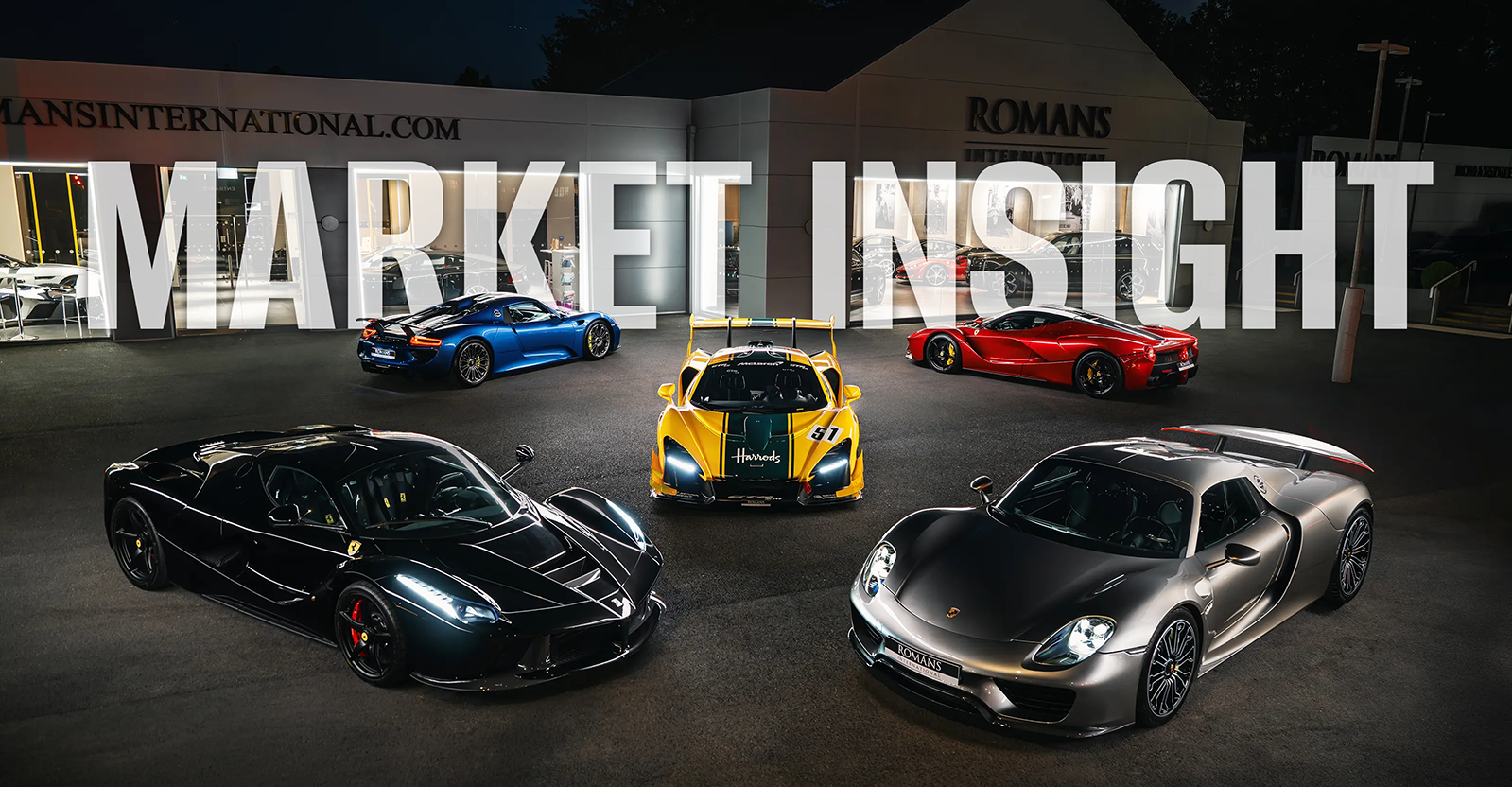
We sat down with Romans International Director, Tom Jaconelli, to see how market trends are shaping the cars they are buying, selling, and talking about.
There is a lot of uncertainty in the world at the moment and the car market is no exception. Some makes and models have seen their values rise exponentially over the past few months, while others that are very similar on paper have been left behind. The demand and appeal of analogue, driver focused and more involving cars has sparked a movement amongst Modern Classics, especially those considered the 'last of' certain features.
So in order to try make sense of the latest movements in the market and how they are shaping the stock appearing in showrooms, who better to reach out to than our Dealer Partners. To get some kind of insight into what is happening in the car market, we sat down with Romans International Director, Tom Jaconelli, to see how market trends are shaping the cars they are buying and selling.
If anything, in the stronger parts of the market this year we’ve seen buyers become slightly less selective. When values are moving as quickly as they have been, there’s a danger in waiting 6 months for the perfect colour or specification, only to find the whole market has moved on by the time you find it. There has definitely been an element of FOMO, particularly around the rarer Ferraris, where sometimes the priority is simply making sure you own the right model.
That doesn’t mean people are buying anything. Colour, spec and mileage are still hugely important, and we’re very selective about the examples we buy ourselves. Mileage is interesting because there are really two different types of buyers. For someone building an investment-grade collection, ultra-low or delivery mileage can make a huge difference. But we also have plenty of clients specifically looking for cars with some mileage on them because they actually want to use them and don’t want every extra mile to feel expensive.
So buyers still want the right car, but in a rising market I think some people have probably waited too long for absolute perfection and missed the opportunity altogether.
I don’t think the definition has changed that much, but the age at which a car can become collectable definitely has. Historically, people thought a car needed to be decades old before it earned that status. Now you can have cars that are only a few years old which people already view as collectable.
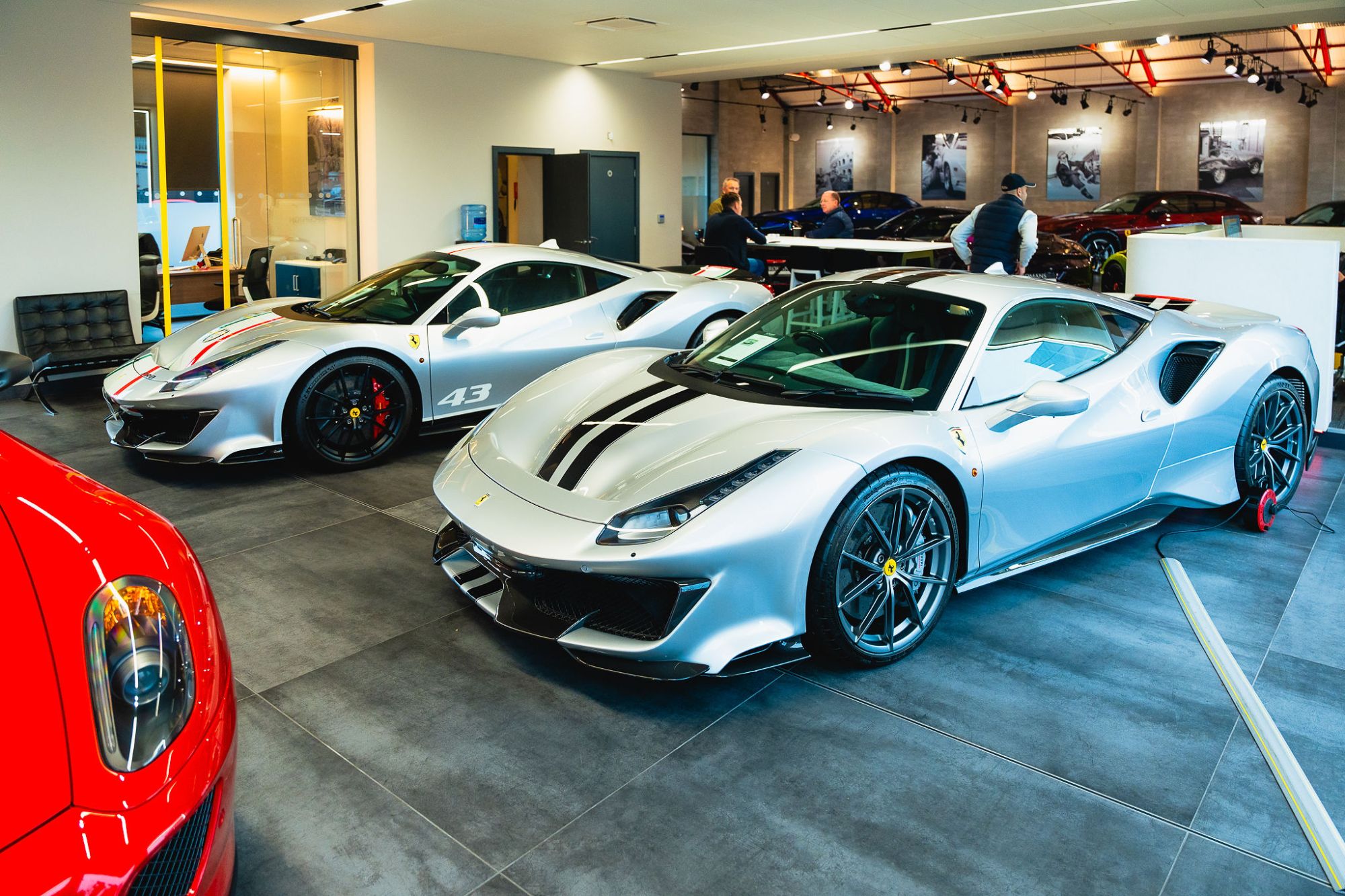
A 488 Pista is a good example. It isn’t an old car, but as everything moves towards hybridisation, electrification and tighter emissions regulations, cars like that start to represent something buyers know probably won’t be repeated in quite the same way.
You could even make the argument for something like a current-generation GT3 RS. It isn’t numbered or especially old, but people are starting to look at what a car represents within that model line, rather than simply how old it is or how many they made.
That’s probably the biggest shift. A car no longer needs to be 25 years old or one of 500 to be considered collectable.
This has probably been one of the biggest challenges of the market this year: working out what’s real and what’s just an ambitious asking price.
That’s where having your finger on the pulse matters. We use our own transactional data, but just as importantly we’re constantly talking to clients, other dealers and people in the market. Advertised prices can move very quickly, but that doesn’t necessarily mean cars are actually selling there.
I have much more confidence in models where values have moved gradually and you can see genuine transactions supporting each step. The 458 Speciale is a good example – the market moved through £400k, £450k, £500k and beyond in a fairly natural way.
On other cars, you sometimes see supply dry up and then the last couple of sellers suddenly try to move the market up by £100k. Sometimes it sticks, sometimes it doesn’t. We’re already seeing a few of those cars soften again.
We watch the US market because the trends often start there, but the pricing dynamics are very different, so you can’t just take a US sale and apply it to the UK.
I don’t think this is a bubble though. I think we’ve seen a re-valuation of the best analogue and combustion-era cars and I believe it has been coming for a while – it just happened much faster than most people expected. Some of the more extreme moves may have some kind of correction but anyone hoping for values to return to where they were last year I think will end up very disappointed.
Specification has always mattered and it still matters massively. On certain cars, there can be a huge difference between one with all the right options and one that’s missing something buyers really want. Carbon packs, lightweight seats, wheels, Paint to Sample on Porsche, Tailor Made on Ferrari – all of those things can make a big difference.
But unusual doesn’t automatically mean desirable. You can have the rarest colour combination in the world, but if nobody actually likes it, that doesn’t make it valuable.
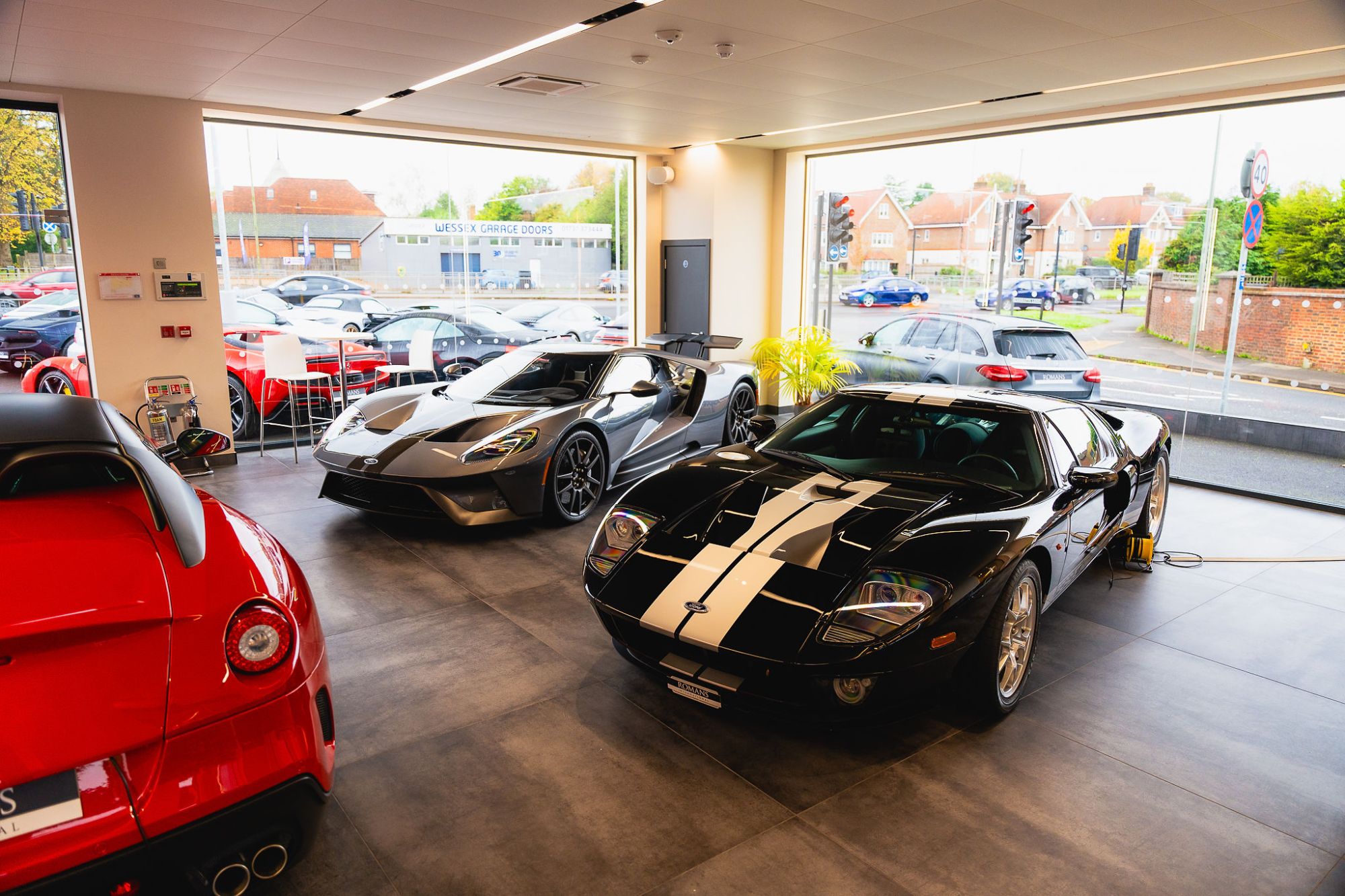
The best specs tend to be either very classic and totally right for the car, or something genuinely individual that’s been done exceptionally well. Manual gearboxes obviously matter on certain models too, but I don’t think collectability comes down to having three pedals. Engine, design, how the car drives and the status that model develops are just as important. Ultimately people want the best version of a car they already want to own.
There are definitely more younger buyers coming into the market, but I wouldn’t say they’re replacing the traditional collector. We still sell plenty of cars to people who have been buying for decades. The younger buyers are really additional demand.
What has changed more is the culture around ownership. Younger buyers are generally much more engaged with social media, they share their cars, go to events and get involved in the wider scene. I think that’s really healthy for the market because it makes the whole world more visible and accessible.
Their tastes naturally tend to be different too. The 1990s, 2000s and 2010s mean more to them than a lot of the older classics.
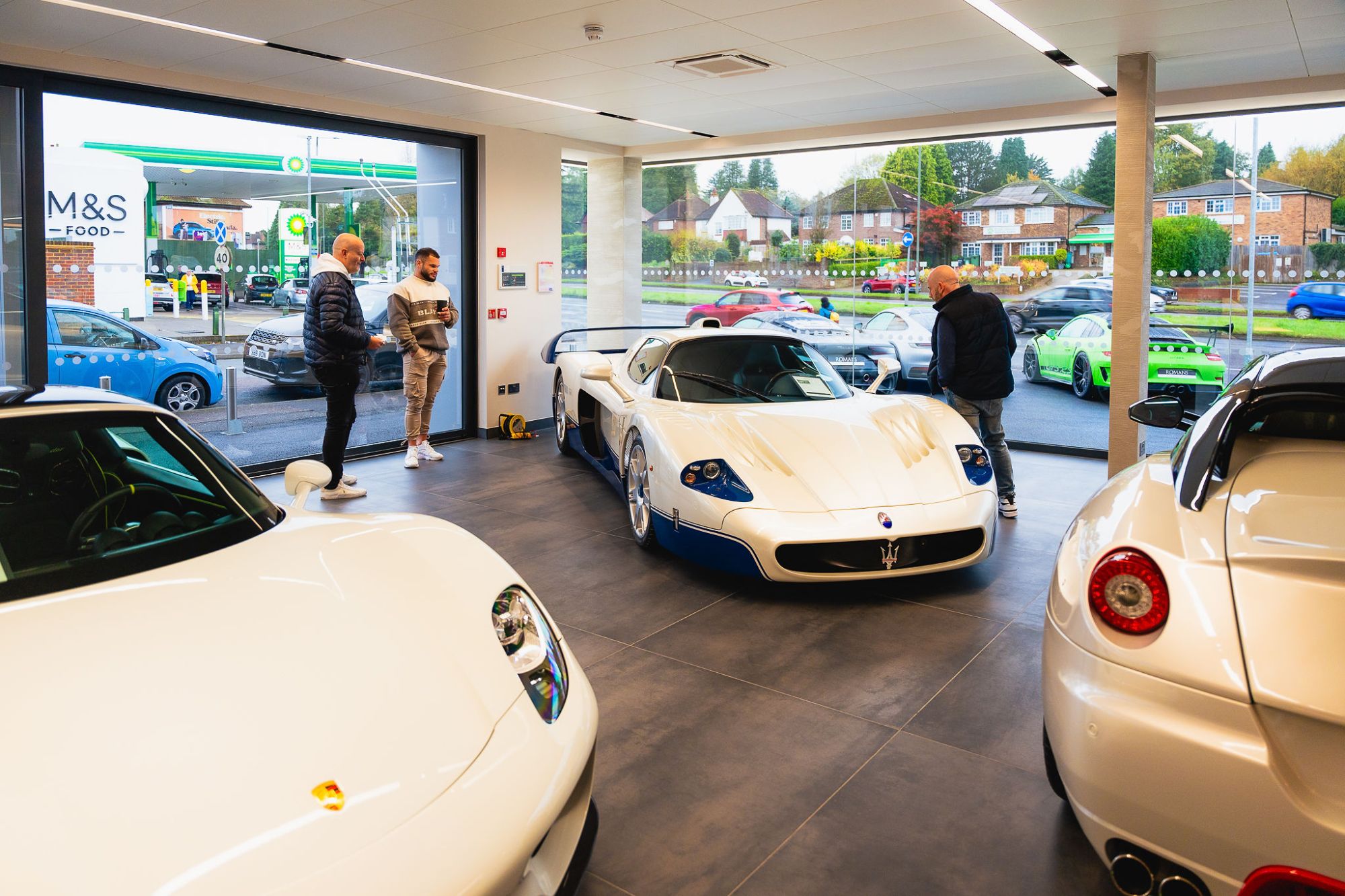
What I find really interesting, though, is that cars like an Enzo, Carrera GT or Murciélago now go beyond simple childhood nostalgia. You’ve got people who were born years after some of those cars came out who still see them as absolute icons.
That tells you those cars have become culturally important in their own right, rather than just being desirable to the generation that first grew up with them.
Definitely, although I think there are two things going on. Firstly, people obviously value naturally aspirated engines, hydraulic steering, manual gearboxes and cars with a bit less between the driver and the road. As new cars become more hybridised and technologically complex, those older qualities feel more special.
But the price of new cars is a massive part of it too. Some new supercars are now £300k, £400k or £500k by the time they’re properly specified, and buyers are very conscious of the depreciation risk.
At that point, people start thinking: for the same money I could buy something with more character, more rarity and potentially much stronger residuals.
That doesn’t mean the new cars aren’t brilliant – many of them are phenomenal – but when an older car gives you more theatre, more involvement and potentially a better financial proposition as well, you can understand why demand has moved that way.
I don’t think ‘newest’ automatically means ‘most desirable’ anymore. The latest cars are incredibly expensive, often more complex and sometimes a bit less characterful than what came before, so buyers are much more willing to look backwards instead of automatically chasing the newest model.
That said, big premiums haven’t disappeared. They’ve just become much more concentrated around genuinely special cars. Ferrari still does this incredibly well – Daytona SP3, SF90 XX – and Porsche did it with the 911 S/T. What has changed is you’re far less likely to see huge overs on relatively regular production cars.

Manufacturers have also become much better at pricing some of that future premium into the car themselves. The list prices of the really special stuff are already incredibly high.
So overs are still very much alive, but the car generally needs to be limited, hard to get or genuinely exceptional.
I don’t think they’re changing the fundamentals, but they are definitely making the word ‘limited’ less meaningful on its own. There are so many special editions now that you can’t just make something a bit more powerful, add a few bits of carbon, put a numbered plaque on it and expect it to become a classic.
The best cars still need a reason to exist. Maybe it’s much lighter, looks significantly more aggressive, has a genuinely different driving experience, links back to something important in the brand’s history or does something mechanically interesting.
Manufacturers clearly know this too, which is why we’re seeing more attempts to bring back elements people associate with older cars – manual gearboxes, more driver involvement, heritage references.
The other thing is the market is much bigger and much more global now, so you can build 1,500 or 2,000 of something and still call it limited because there are enough buyers worldwide. That can still make it desirable, but desirable and genuinely rare aren’t always the same thing.
The internet has massively changed the way people discover and buy cars. We can put a teaser on Instagram and within minutes have several people asking about the car. We regularly do deals through Instagram, WhatsApp or our own community without the client necessarily having seen the car in person.
So there’s no question that strong photography, video and social media can create awareness and desire very quickly. I’m not sure the internet completely changes what people want, though. I think it amplifies it.
You can present a car amazingly well online and make someone suddenly pay attention to it, but equally we still have people come into the showroom, see something in the flesh and say, “I never really got that car until now.”
There’s still nothing quite like seeing, hearing and experiencing a great car properly.
We’re definitely seeing more international enquiries, both from people wanting to buy and people offering us cars, but the majority of the cars we actually sell still stay in the UK. Right-hand drive naturally limits where some UK cars can go, and import duties in a lot of countries make things more difficult.
At the very top end, particularly with hypercars which are often left-hand drive anyway, the market becomes much more global. The buyer could be anywhere. The UK market itself has been exceptionally strong this year, so we haven’t really needed to look abroad for buyers. And where possible, we actually prefer important cars to stay here. Once a really special car goes overseas, there’s always a chance you’ll never see it again.
Brexit has definitely made cross-border transactions more complicated, but the UK is still one of the most important markets in the world for these cars. Historically we’ve had very strong allocations of special cars and there is still a huge depth of stock and collectors here.
So yes, the market is increasingly global, but for us the UK remains very much at the centre of it.
Honestly, I don’t think there are many genuinely overlooked cars left. Everyone is looking at everything now. The 2000s and 2010s certainly aren’t some undiscovered part of the market anymore.
At the more accessible end, I still really like the Audi R8, particularly the V10 manuals. The design has aged incredibly well, the naturally aspirated V10 is something we’re unlikely to see again and I think people will look back and realise what a special combination that was.
The same could be said for the Lamborghini Huracan and whilst the STO gets most of the attention, I quite like the Huracan Tecnica which has flown a little bit under the radar - the Tecnica still gives you that naturally aspirated V10, rear-wheel drive and arguably a more usable package and they haven’t taken off in value as yet.
Something like a 911 S/T already has nearly everything you’d want – naturally aspirated engine, manual gearbox, limited numbers, fantastic to drive – but because it’s still so new, the market probably hasn’t decided yet quite how important it is. The Dakar is another one I find interesting because there really isn’t much else like it.
There aren’t many secrets left though. It’s more about spotting which cars already have all the right ingredients before the market fully decides how important they are.
Everyone’s taste is different, but if I were buying purely for myself, I’d be looking for character, driving experience and design above everything else.
I’ve always had a soft spot for the AMG Black Series cars – C63, SL65, SLS. They have so much personality and I just don’t think we’ll see cars like them again. I feel the same about the Gallardo. The design has aged incredibly well, they still feel properly exotic and I think the rarer versions are only going to become more desirable.
Aston Martin is another area I really like. Manual V12 Vantage S, Vantage GT8, even something like a Vanquish Zagato – they’re rare, sound amazing and have loads of character. I still think some of those cars are relatively underappreciated.
At the very top end, though, the Ferrari halo cars are still the benchmark for me – F40, F50, Enzo and LaFerrari. They just have everything: design, rarity, historical significance and huge desirability.
A huge thank you to Tom for taking time out of his busy schedule to answer our questions. To find out more about Romans International visit their website HERE